
Advanced Therapies Can’t Afford to Wait 14 Days
When your therapy expires before your sterility test is complete, traditional sterility testing isn’t just inefficient, it’s incompatible.
Common risks faced by ATMP and CGT teams:
- Batch release delays due to test duration
- Lost product due to insufficient sample volume
- Manual testing that doesn’t scale with demand
- Risky workarounds to meet patient timelines
You’ve modernized manufacturing and supply chain, so why not QC?
Move Faster without Compromising Compliance
Many teams assume speed comes at the cost of compliance. That’s no longer true. Modern rapid sterility methods are designed to detect microbial contamination in therapies to keep patients safe. Moreover, they are aligned with USP <73> and USP <1071>, recognized by regulators when appropriately validated, and used globally.
Do you want to learn more? Watch our on-demand webinar Understanding USP <73> to Accelerate Sterility Testing for Short-Life Products
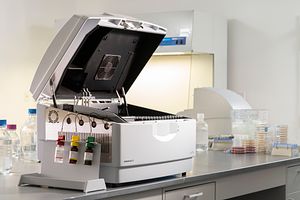
Regulatory Changes: USP 73 & 1071 Updates at a Glance
The latest chapters of USP <73> and <1071> introduce key updates impacting sterility testing and rapid microbiological methods (RMMs). Our expert guide breaks down what’s new and how Celsis® can help you stay compliant and efficient.
Explore the Guide

Absolute Detection of Slow-Growing Microorganisms
Ensuring full detection of even slow-growing microorganisms within a specified test period is paramount, closing the window of time a patient is at risk when administering ATMPs or short shelf-life products ahead of sterility results. With Celsis, you can confidently end the assay at your validated time period. There is no need to continue monitoring samples for contamination beyond the specified test period out of fear that critical, slow-growing organisms, such as Cutibacterium acnes, might appear later.
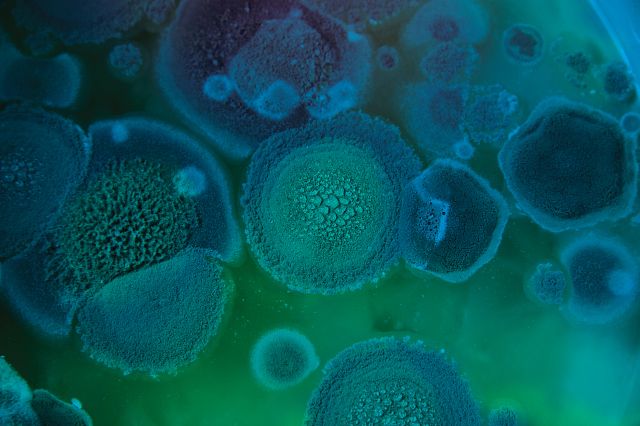
Proven Performance Detecting Industry-Relevant Molds
The Celsis platform has proven performance data in detecting industry-relevant environmental molds that frequently occur in cell and gene therapy manufacturing environments using standard test media and sampling parameters. Our laboratory team is prepared to use your site-specific environmental mold strains to perform your Limit of Detection and Equivalency validation studies, as we've successfully done for over 40 manufacturing and service laboratory networks in the past 2 years.
Eager to learn more? We are happy to help.
Introducing Celsis®: Rapid, Compliant Sterility Testing for Advanced Therapies
Celsis delivers reliable sterility results in as little as 4 days thanks to the ATP-bioluminescence technology. It’s the rapid release solution trusted by leading CGT and ATMP manufacturers worldwide.
Celsis Adapt™ extends this platform for cell-containing samples. Together, they enable:
- Faster batch release
- Reduced manual handling
- Validated, audit-ready results
Purpose-Built for Therapies Like Yours
| Your Challenge | Celsis Solution |
| Short shelf life | 3, 4, or 7 day results |
| Small-volume samples | Low sample volume requirement |
| Cell-based matrices | Celsis Adapt™ compatibility |
| Regulatory uncertainty | Validation + compliance support |

Explore the Celsis® Rapid Microbial Detection Brochure
Gain insight into Celsis® technologies, platform capabilities, implementation considerations, validation support, and microbial detection applications across a range of product types.
Access the Brochure
Success Stories from Leading Companies
Building Confidence in Regulatory Validation of Cell-Based Products
Advanced medicinal therapies, often derived from mammalian- or human-cellular tissues or cell lines, present unique interferences with bioanalytical assays. Labors LS and Charles River share a detailed account of implementing ATP-bioluminescence for rapid microbial detection in complex, cell-based matrices.
Applying Rapid Sterility Testing in Biology Quality Control
Merck scientists presented a case study on how they successfully applied an existing method for the detection of microbial contaminants to optimize their qualification of cell lines and viral stocks used in biology QC studies, such as viral clearance, viral safety, and in vitro potency.
Industry Leaders Beta Testing for Cell-Containing Samples
Johannes Oberdorfer presented on his experience evaluating the Celsis Adapt sample concentrator system on monoclonal antibody samples that contained Chinese hamster ovary cells, a common cell used in the manufacturing of medical treatments. As cell-containing samples are typically difficult to test using rapid microbial methods, the success of this project allows other quality control laboratories to look to the future in the hopes of more multi-functional contamination testing equipment.
Undertaking safety testing with high specificity yet a reduced TAT is now possible with our transition to Celsis rapid micro testing. The knowledgeable team at Charles River supported us in every possible way to ensure our method validation and matrix verifications were tested to their absolute limits. Similarly, we wholeheartedly challenged the Celsis instrument, but it never faulted and continues to support our compendial testing requirements.”
Dr. Benjamin C. Lewis – Head Quality Control, Southern RNA
-
Related Resources
- A Rapid Microbiological Method Case Study for Advanced Therapy Medicinal Products - Stacy Ramsey, Senior Manager, Celsis® & Microbial Applications Lab
- Optimizing Contamination Control in Cell & Gene Therapy - Brice Chasey, Associate Director, Product Management, Celsis®
- Enhancing Rapid Microbiology QC in Cell & Gene Therapy - Jeff Domsic, Sr. Scientific Portfolio Specialist, Microbial Solutions