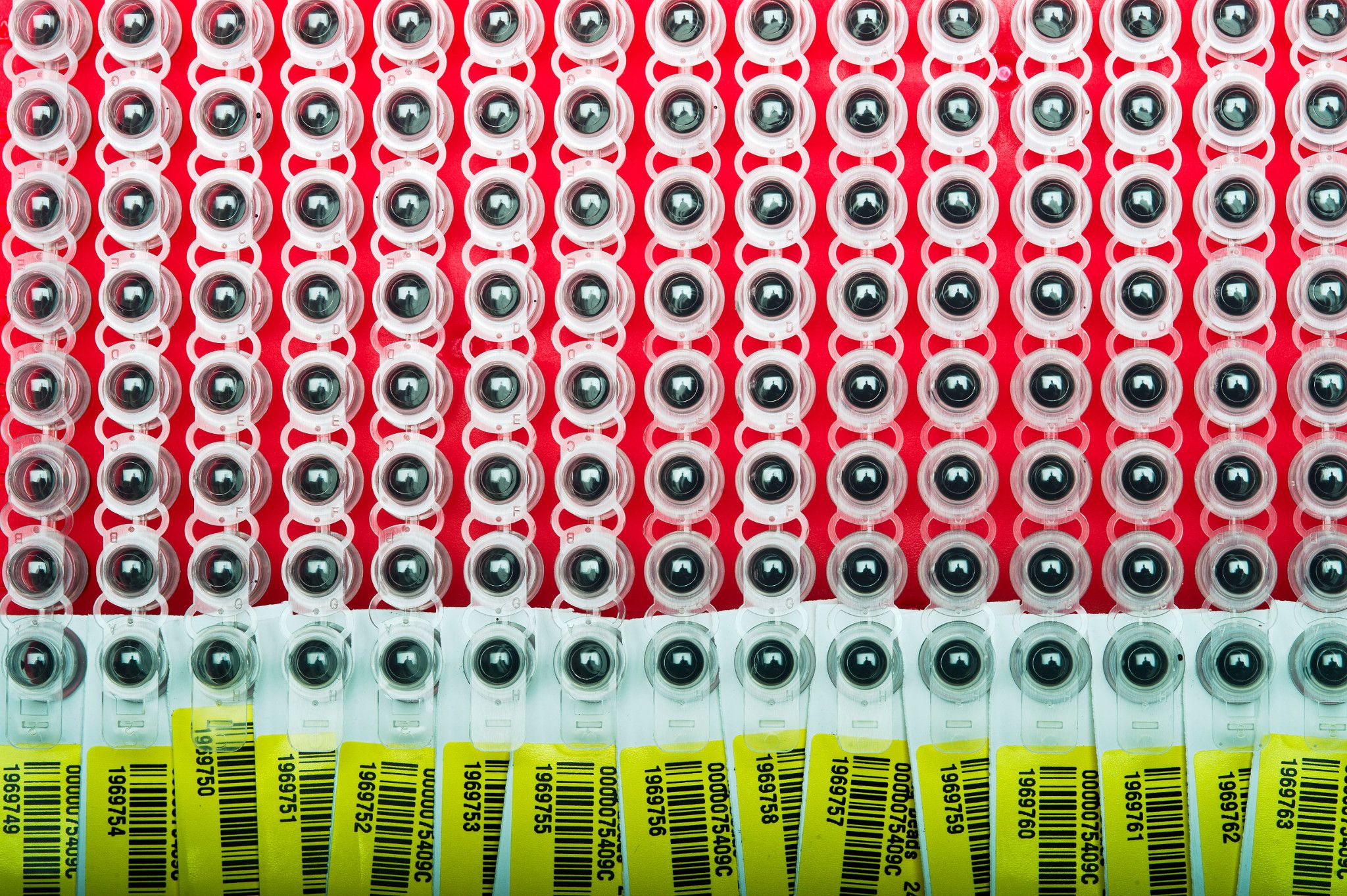
Fungal Sequencing Services - ITS Region: Accugenix® FunITS
Fungal identification, especially filamentous fungi, has historically been a very difficult task. Due to the amount of experience and time required to accurately identify filamentous fungi to the species level, it has been common practice to either identify these organisms to the genus level, or in some cases, simply identify them as "molds."
Accugenix® FunITS identifies fungal isolates through comparative sequencing of the Internal Transcribed Spacer (ITS2) region in fungi. The ITS2 region is a commonly sequenced fungal DNA region that is widely accepted as the "gold standard" by fungal taxonomists and recognized for identification of fungal species by the International Barcode of Life Consortium. Because the fungal ITS region has a higher degree of variation between closely related species than other DNA regions such as D2, ITS is arguably the best available method for identifying fungal species. The Internally Transcribed Spacer (ITS) lies between highly conserved nuclear ribosomal DNA (rDNA) genes (18S, 5.8S, 28S). This region can be hypervariable and can be used to provide information on sample diversity.
Accugenix Identification: Report Guide
Download our guide to gain a better understanding of fungal sequencing identification results.
Download the Guide
Benefits of ITS Sequencing Services for Fungal Identification
This genetic approach to our fungal identification service provides a more reliable and rapid method to identify microbial species than any other fungal identification test. This scientifically proven method, combined with a validated, continuously curated, and proprietary fungal library, results in more accurate fungal identifications. Outsourcing fungal identification to our cGMP-compliant, ISO 17025-accredited contract testing laboratories saves time and resources for you to focus on other important QC tasks.
Genotypic Analysis for Fungal Identification
The Accugenix FunITS fungal identification service uses a genotypic analysis process that adheres to the reference method used by taxonomists because it delivers the most accurate and reliable sequence data for fungal identifications. After a fungal ITS sequencing service request is submitted and the sample arrives at our laboratory, our team uses a genetic analyzer to process it. The fungal DNA sequence is assessed for quality, assembled, and compared to the validated Accugenix library.

Optimizing MALDI-TOF for Filamentous Fungi Identification
This webinar explains the challenges and solutions to adopting MALDI technology for identification of filamentous fungi with an emphasis on sample preparation and database development.
Watch the Webinar
A phylogenetic tree is interpreted by trained data analysts in order to make the fungal identification. The genotypic analysis, combined with a full coverage and validated library, results in an unparalleled fungal phylogenetic analysis.
Our microbial phylogeneticists use a combination of the genetic variability, branching order of the neighbor joining tree, and knowledge of the interspecies variation when interpreting the bacterial identification reports and assigning the taxonomic confidence level.
The proprietary methods employed by our fungal identification service compare sample sequences against full-coverage proprietary libraries, result in conclusive data interpretation, and an identification with assigned confidence levels based on phylogenetic analyses.
Webinar: The Hidden Costs of Microbial Misidentifications
This webinar examines real-life challenges and consequences of inaccurate microbial identification as well as how to proactively mitigate these obstacles.
Watch the Webinar
Specifications
-
Order Codes
Turnaround Time (TAT) Test Code Service Description Same-day FunITS-0 Accugenix Fungi (ITS2)
DNA Sequencing of the ITS2
rRNA Region in Fungi1-day FunITS-1 2-days FunITS-2 5-days FunITS-5
Frequently Asked Questions (FAQs ): Fungal Sequencing Services
-
What techniques are used to identify fungal isolates?
Comparative DNA sequencing of ITS and D2 rRNA regions are the two main options for identifying fungal isolates. Accugenix fungal identification service uses the ITS2 sequence, which has proven to be the most widely accepted DNA sequence for fungi. ITS2 has more variability than the D2 expansion segment DNA sequence, thus providing greater specificity. This yields a much higher resolution in species identification than D2. ITS2 is recognized for the identification of fungal species via DNA sequence signatures by the International Barcode of Life Consortium.
-
Why is an accurate fungal identification important?
Accurate fungal identification is critical for environmental monitoring (EM) programs in pharmaceutical and other regulated product manufacturing industries. Identification of unknown isolates is an essential first step in understanding the risk that microorganisms have on the manufacturing environment, final product, and subsequently the patients. Accurate fungal identification services that provide EM data tracking and trending solutions maintain a clear baseline view of the facility’s microbial flora so that unusual activity is recognized early and there is time for remediation.
-
What are the critical elements of accurate fungal identification?
The organism reference library is an essential part of the fungal identification process. A fungal isolate cannot be accurately identified without a matching species entry in the database; therefore, a relevant and validated reference library is equally as important as the technology and methodology used to identify fungi. Aside from library comparison, interpretation of the sequence and report generation are also critical parts of the fungal identification process.
-
Why is the ITS2 region preferred over the D2 region for fungal identification?
Accugenix uses the ITS2 region, which has proven to be the most widely accepted DNA sequence for fungal identification. It is recognized for the identification of fungal species via DNA sequence signatures by the European Consortium for the Barcode of Life.
ITS2 has more variability than the D2 region, thus providing greater specificity between organisms. This yields a much higher resolution in species identification than D2. See case studies.