
In Vitro Chromosomal Aberration Test
The chromosomal aberration assay is designed to evaluate the potential of a test compound to induce structural chromosomal abnormalities such as breaks and exchanges.
This assay follows OECD Test Guideline 473, an internationally accepted standard that ensures the test is performed with consistent methodology and regulatory compliance. OECD 473 covers testing in cultured mammalian cells, both with and without metabolic activation, providing reliable data to assess genotoxic risk early in development.
Chromosomal Aberration Test Procedure
The chromosomal aberration test can be performed in primary human peripheral blood lymphocytes (HPBL) or established cell lines such as Chinese hamster ovary (CHO) cells. Cultures are incubated with several concentrations of the test compound for 3-4 hours in the presence and absence of metabolic activation (S9) and for 21 hours in the absence of S9.

In Vitro Chromosomal Aberration Test Guide
This guide explains the test’s methodology, regulatory significance, and its role in safeguarding human health through early detection of genotoxic risks.
Read the full guide
A positive outcome is characterized by a statistically significant, dose-dependent increase in aberrant cells that exceeds historical negative control limits. The following is a list of some of the commonly used cell lines that are compatible with the chromosomal aberration test procedure:
- Human peripheral blood lymphocytes (HPBL)
- Chinese hamster ovary (CHO)
- Chinese hamster lung (V79)
- Mouse lymphoma L5178Y
- Syrian hamster embryo (SHE)
- Rat kangaroo kidney (PtK1)
- African green monkey kidney (Vero)
- Human lymphoblastoid (TK6)
- Human promyelocytic leukemia (HL-60)
- Human hepatoma (HepG2)
These cell lines have been used extensively in genetic toxicology testing and have shown to be sensitive to various genotoxic agents. By using multiple cell lines in the CAT procedure, it is possible to increase the confidence and reliability of the results and assess the potential genotoxicity of test substances in a variety of different cell types.
The choice of cell line for the CAT procedure may depend on various factors such as the type of test substance being evaluated, the specific endpoint being measured, and the availability of the cell line. However, the cell lines listed above are widely used and have been validated for use in the CAT procedure in multiple studies.
Charles River supports HPBL, CHO, and V79 cells validated with in vitro chromosomal aberration assay at different sites supporting clients.
When to Perform the Chromosomal Aberration Test
- Screening
- IND-enabling studies
- As part of the ICH S2(R1) standard battery
- REACH requirement
- As part of Annex VIII testing
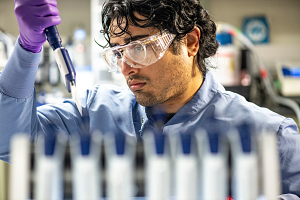
Genetic Toxicology Drives IND Success
Genetic toxicology is critical to any IND-enabling program, offering essential insights into a drug’s safety profile before clinical trials.
Watch the webinar
Frequently Asked Questions (FAQs) About Chromosome Aberration Test
-
What is a chromosome aberration test and what does it verify?
A chromosome aberration test is a laboratory procedure used to identify substances that can cause damage to chromosomes. Chromosomes are structures within cells that contain genetic information. This test aids in determining if a substance can increase the risk of genetic defects. Charles River provides in vitro mammalian chromosomal aberration test services (OECD 473) to identify substances that cause structural chromosomal aberrations in cultured mammalian cells.
-
What is meant by chromosome aberration analysis?
Chromosome aberration tests are used to evaluate the clastogenicity of chemical and physical agents; that is, the capacity of these agents to cause breaks in chromosomes and produce microscopically visible fragments or structural rearrangements. Aberrations are scored in metaphase chromosomes of dividing cells.
-
What causes chromosomal aberrations?
Chromosomal aberrations are most often caused by errors during cell division. Cell division in humans occurs via mitosis or, only in sex chromosomes, meiosis. In mitosis, cells duplicate their chromosomes and produce daughter cells with an identical number of chromosomes as the original cell. Aneuploidy is a chromosomal anomaly in which a cell has an extra or missing chromosome.
-
Why is the chromosome aberration test important?
The chromosome aberration test is crucial for assessing the safety of chemicals, drugs, and other substances. Identifying potential genetic hazards helps protect both human health and the environment.
-
What are the applications of the chromosome aberration test?
The chromosome aberration test is widely used in various industries, including pharmaceuticals, chemicals, cosmetics, and medical devices. To guarantee product safety, regulatory safety assessments must include a key component.
-
What are the regulatory requirements for the chromosome aberration test?
The specific regulatory requirements for the chromosome aberration test depend on the intended use of the substance being tested. However, many regulatory agencies, such as the FDA, EPA, and OECD, have established guidelines for conducting and reporting the test.