
The Importance of Pharmaceutical Environmental Monitoring Programs
A microbial environmental monitoring (EM) program demonstrates that a facility is operating under a state of control and plays a crucial role in maintaining product quality and safety. Explore the various types of monitoring such as air, surface, personnel, water, and compressed gas. Each serves a specific purpose for identifying potential sources of contamination in the production environment.
By implementing comprehensive microbial EM strategies, pharmaceutical companies can ensure regulatory compliance and safeguard the integrity of their products. To further enhance your EM program we offer a wide range of solutions, from microbial identification and strain typing, to data analysis and management. Discover the full spectrum of how we can support your microbiological environmental monitoring efforts.
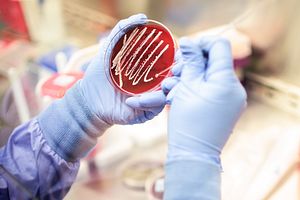
Webinar: Elevating Cleanroom Validation through Risk-Based EMPQ Strategies
Investigate the relationship between cleanroom validation, a critical building block for developing a risk-based monitoring program, and EMPQ. Explore the pivotal role of site selection and valid microbial identification in crafting effective contamination control strategies. Available for a limited time.
Watch Now
Pharmaceutical Air Monitoring
The measurement and analysis of airborne particles provide key insights into the cleanliness of the environment. Knowing the number of nonviable particles and the number and identity of viable particles in your air helps ensure your manufacturing environment is in a state of control.
Air monitoring in the pharmaceutical industry is essential to detect contaminants that could compromise product quality. Variations in results may also provide early warning signs of atypical equipment operating conditions. For example, increasing counts of nonviable particles at a particular sampling location may be due to pumps needing repair. High viable air counts could indicate that bottle handler preventative maintenance activities were performed incorrectly. Result variations may also provide early warning signs of atypical equipment operating conditions.
Significance of Air Monitoring
- Ensuring cleanroom integrity
- Controlling airborne contaminants
- Compliance with regulatory standards
Air Sampling Techniques
- Active air sampling
- Passive air sampling
- Nonviable particle counting
Pharmaceutical Surface Monitoring
Surface environmental monitoring identifies potential contamination sources on various surfaces within facility production areas. Swabs and contact plates are commonly used to collect samples. Microbial enumeration and identification are leveraged to evaluate the results of surface sampling. Tracking and trending of surface sampling results generates evidence that cleaning and disinfection programs are working and effective.
Significance of Surface Monitoring
- Identifying potential contamination sources
- Evaluating cleaning and disinfection effectiveness
- Preventing cross-contamination
Sampling Methods for Surface
- Swab sampling techniques
- Contact plates
Evaluation of surface contamination
Personnel Monitoring
Microbial environmental monitoring of personnel is another critical factor in maintaining an effective EM program. This type of monitoring is especially important in production areas where manual aseptic processes are conducted. In addition to being used during the gown qualification process, contact plate sampling of personnel is conducted after critical interventions and can also be done prior to exit from a cleanroom. The combination of personnel, air, and surface monitoring are all taken into consideration when assessing the state of control of a room or process.
Significance of personnel monitoring
- Monitoring critical processes
- Assessing proper gowning and gloving
Pharmaceutical Water Monitoring
Water plays a fundamental role in pharmaceutical manufacturing both as a raw material and as an agent for cleaning and rinsing equipment. Assessing water quality by measuring microbial bioburden and endotoxin levels ensures that water meets applicable standards for its intended use. Water system validation and robust pharmaceutical environmental monitoring strategies are critical to generate water that is compliant with regulatory requirements and pharmacopeial standards. Accurate reporting and documentation are essential components of this process.
The Importance of Water Quality
- Water as a critical raw material
- Microbial contamination risks
- Regulatory requirements and guidelines
Water Sampling Programs
- Sampling points and sample collection methods
- Microbial enumeration and identification
- Endotoxin and other contaminant testing
Regulatory Requirements for Water Monitoring
- Pharmacopeial standards (e.g., USP, EP)
- Validation and routine testing
- Reporting and documentation requirements
Other Utilities for Environmental Monitoring in Microbiology
Utility monitoring is part of a robust and comprehensive pharmaceutical environmental monitoring program. Microbial monitoring of additional utilities at a site, including compressed gas and steam for sterilization, must also be performed if they come into direct contact with products or primary containers.
Case Study: Sanger Sequencing Troubleshooting for Cancelled Samples
Available for a limited time, unlock the secrets of microbial identification in pharmaceutical manufacturing with our exclusive case study on Sanger sequencing troubleshooting for cancelled samples. Dive into the intricacies of its limitations, and how Next-Generation Sequencing (NGS), particularly Targeted Amplicon Sequencing (TAS), emerges as a robust solution.
Read Now
The Key to Success is a Robust EM Program
In the pharmaceutical industry, comprehensive environmental monitoring practices are essential for maintaining product quality, safety, and regulatory compliance. Air and surface sampling help monitor contaminants and can identify potential sources of contamination. Water monitoring ensures the quality of this critical raw material. By implementing these types of environmental monitoring, pharmaceutical companies can safeguard the integrity of their products and protect the health of consumers.
Learn more about our pharmaceutical environmental monitoring solutions.
Frequently Asked Questions (FAQs) About Pharmaceutical Environmental Monitoring:
-
How often should a facility perform environmental monitoring?
Recommended frequencies can be found in USP <1116> Microbiological Evaluation of Clean Rooms and Other Controlled Environments. In general, frequency of EM depends on the manufacturing environment, specifically of sites and the subsequent treatment received by the product after it has been aseptically processed.