
What is MALDI-TOF MS?
MALDI-TOF MS represents a significant leap in identifying yeast, mold, and bacteria. It’s a sophisticated method for analyzing proteins, primarily ribosomal proteins, from microbial isolates to accurately identify them.
Seminar: Exploring MALDI-TOF Mass Spectrometry for Microbiology
Available for a limited time, this seminar confronts the strengths and limitations of MALDI-TOF mass spectrometry as a reliable, compliant, and scalable option in quality control and environmental monitoring.
Watch Now
How MALDI-TOF MS Works
MALDI-TOF MS Workflow
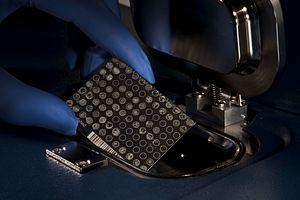
The process involves a direct smear protocol for bacteria and yeast, starting with an isolated colony and smearing it onto a position on the target plate. Formic acid is applied to lyse the cells and a matrix is applied to facilitate ionization of the proteins. A second sample preparation method called ethanol extraction takes a little longer than the direct smear but results in a cleaner protein extraction and may help generate more reliable spectra. This method is used for fungal identification and some bacteria and yeast. Both the quality of the isolated colony and the sample preparation step are crucial as they both influence the accuracy of the results.
Inside a MALDI-TOF MS Instrument
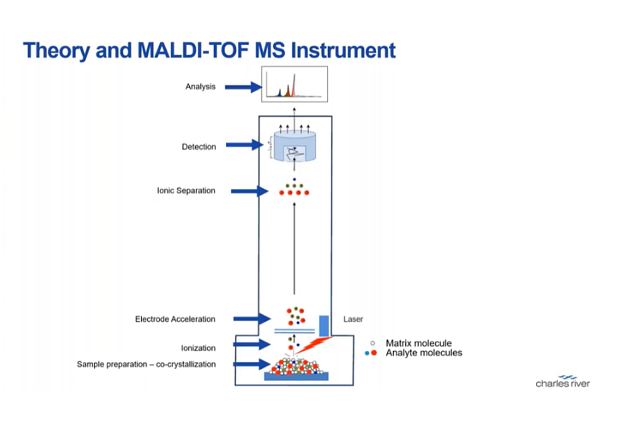
In the instrument, the sample undergoes a two-step process: desorption and ionization. A laser fires at the sample, vaporizing and ionizing the proteins. These ions are then accelerated in a vacuum tube, where they separate based on size - smaller proteins travel faster than larger ones. The time it takes for these ions to reach a detector (time of flight) is measured, creating a protein spectrum.
Advantages of MALDI-TOF MS
- Speed and efficiency: rapid processing of samples, providing results within minutes
- High accuracy: enhanced precision in microbial identification compared to traditional methods
- Cost-effectiveness: reduced reagent costs and minimal subjective analysis
- Broad application: capable of analyzing various microbial types, including challenging filamentous fungi
Limitations of MALDI-TOF MS
- Initial investment: high cost of acquiring a MALDI-TOF system
- Technical expertise required: dependence on the quality of sample preparation and operation
- Database dependency: accuracy is contingent on a comprehensive reference database with entries reflecting the strain diversity observed in pharmaceutical facilities
Regulatory Implications of MALDI-TOF MS
In the regulatory landscape characterized by documents like EU GMP Annex 1 and USP <1113>, MALDI-TOF MS is increasingly recognized for its precision and reliability. These regulations mandate accurate microbial identification to assess the potential impact on product quality, particularly in critical Grade A and B manufacturing areas. Accurate ID is essential, as incorrect identifications can lead to ineffective contamination control strategies, impacting product quality and patient safety.
MALDI-TOF MS as Part of a Contamination Control Strategy
MALDI-TOF MS is a key component of a successful contamination control strategy by contributing to:
- Effective cleaning and disinfection accurately identifies microorganisms and informs the most effective cleaning strategies
- Monitoring systems: enhances the detection and prevention of contamination
- Investigations, trending, CAPA, and root cause analysis: accurate IDs contribute to more effective investigations and corrective actions
The technology’s ability to identify a broad spectrum of organisms, including those difficult to control like spore formers and molds, is critical to maintain a complete understanding of the microbiota in manufacturing environments.
Comparison of MALDI-TOF MS with Other Identification Methods
MALDI-TOF MS offers a balance that is often missing in other methods:
- Phenotypic methods: while simpler and cheaper, they lack the accuracy and speed of MALDI-TOF MS
- Genotypic systems: though highly accurate, they are costlier and more complex
For QC professionals and facility managers, MALDI-TOF MS is a powerful ally in the quest for operational efficiency and patient safety. Understanding its scientific underpinnings, limitations, and regulatory context is key to leveraging its full potential. Embracing MALDI-TOF MS can lead to significant improvements in microbial identification processes, aligning with the rigorous demands of the pharmaceutical industry.

Identification of Molds Using MALDI-TOF (MSD/Merck Case Study)
Discover how MALDI-TOF technology enables rapid, accurate identification of molds for contamination control and compliance. Learn from MSD why this method is transforming microbial ID in regulated environments.
Watch the Webinar