
Why Choose High-Throughput Mass Spectrometry Screening?
High-throughput mass spectrometry screening is a powerful tool to initiate drug discovery research. Many high-throughput assay technologies rely on labels, such as fluorophores, that are prone to false-positive and negative results due to optical interference of library compounds. Traditional label-free approaches are often slow, restrictive, and not optimal for large screening campaigns. Charles River’s SAMDI high-throughput mass spectrometry platform overcomes these challenges and enables researchers to develop assays without any buffer restrictions, generating reliable data quickly.
Screening via SAMDI MS allows you to:
- Screen rapidly to expedite hit discovery
- Eliminate false-positive and negative results from optical interference
- Screen multiple targets simultaneously
- Define kinetic parameters
- Characterize virtually any enzyme activity
- Determine compound potency
- Reduce reagent requirements
SAMDI high-throughput mass spectrometry enables hit identification for a broad spectrum of targets, and allows you to screen against a high volume of compounds, identifying enzyme modulators for diverse biochemical activities. Our experienced hit identification team can facilitate rapid and agile assay development, generating reliable data to drive hit candidate selection, downstream study design, and confident go / no-go decisions.
Download a free eGuide to learn more about how the SAMDI technology works, available compound libraries, and next steps for initiating screening.
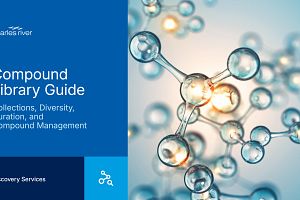
Compound Library Quick Guide
Obtain a breakdown of our collections, comprising over 1.4 million compounds, and learn about our processes for curation, QC, compound management, and screening set design.
Download Now
How Does SAMDI High-Throughput Mass Spectrometry Work?
SAMDI (Self-Assembled Monolayer Desorption Ionization) is a unique approach to high-throughput mass spectrometry. By combining self-assembled monolayers on high-density biochip arrays with matrix-assisted laser desorption ionization (MALDI) mass spectrometry (MS), SAMDI technology enables rapid quantitative assays that can screen millions of compounds per week.

-
Video Transcript
Our SAMDI mass spectrometry technology enhances high-throughput screening to accelerate the discovery of small molecule modulators of biochemical activities and binders to virtually any target.
How do we do this so successfully?
We have developed optimized surface chemistries on gold designed to rapidly and specifically immobilize an analyte of interest out of a complex reaction.
Unlike other mass spec techniques, SAMDI mass spec is amenable to any buffer component, including salts and detergents, encouraging researchers to optimize an assay based on the needs of the target, rather than compromising assay conditions due to the needs of the instrument, generating high-quality, decision-driving data. This solution is enabled by the surface chemistry, which is synthetically flexible and amenable to analyzing enzyme activities and binding interactions with diverse analytes including small molecules, peptides, oligonucleotides, lipids, proteins, and live cells.
The SAMDI biochips are washed to remove unbound analytes and buffer components. A MALDI matrix is applied, and the biochips are ready for mass spec analysis.
How are the biochips analyzed?
SAMDI biochips are analyzed using a matrix assisted laser desorption ionization, or MALDI time of flight mass spectrometry. Upon laser activation, the surface desorbs and the molecules are sent to the detector.
SAMDI mass spec is a powerful and flexible tool and offers solutions for accelerating and advancing small molecule drug discovery.
The innovative surface chemistry of SAMDI biochips enables you to:
- Specifically immobilize your analyte of interest from complex samples, including:
- Small molecules
- Peptides
- Oligonucleotides
- Proteins
- Lipids
- Detect and measure your analytes using MALDI MS for a label-free and high-throughput SAMDI readout
- Optimize assays without any buffer limitations to generate high-quality data
- Characterize kinetic parameters and unravel reaction mechanisms
- Generate clean and reproducible data with Z’-factors that typically exceed 0.8
Contact a member of our team today to discuss how we can support and accelerate your drug discovery project.
How is Innovation Disrupting Small Molecule Hit Identification?
In this webinar, take a deep dive into some of the technologies and strategies that are changing how we approach hit identification for diverse targets and therapeutic areas.
Watch on demand
Frequently Asked Questions (FAQs) About SAMDI Label-Free High-Throughput Mass Spectrometry
-
What kinds of enzyme activity can the SAMDI platform characterize?
SAMDI high-throughput mass spectrometry can characterize virtually any biochemical activity, including, but not limited to:
- Acetyltransferases
- Acyltransferases
- Arginase
- Deacetylases
- Deaminases/deiminases
- Demethylases
- Deubiquitinases
- Glycosidases
- Glycosyltransferases
- Kinases
- Ligases
- Methyltransferases
- Nucleases
- Phosphatases
- Polymerases
- Proteases
- RNA and DNA modifying enzymes
- Ubiquitin ligases
-
Are there any requirements for screening via the SAMDI platform?
A SAMDI assay requires an enzyme and a substrate. The substrate(s) and/or product(s) should feature a handle to enable immobilization onto the SAMDI biochip array.
-
What criteria can help me select between label-based and label-free screening?
Direct detection and quantification of an analyte via mass spectrometry can bring several advantages. If your target or product can be captured onto a SAMDI biochip array, SAMDI MS is an excellent platform for this type of detection, and one of a number of techniques available to help progress your drug discovery project.
Contact our team today to discuss viability and approach options for your hit identification campaign.
-
What is the throughput of the SAMDI MS platform?
SAMDI high-throughput mass spectrometry can screen up to 100,000 compounds per day.