
The Essence of MALDI-TOF Analysis
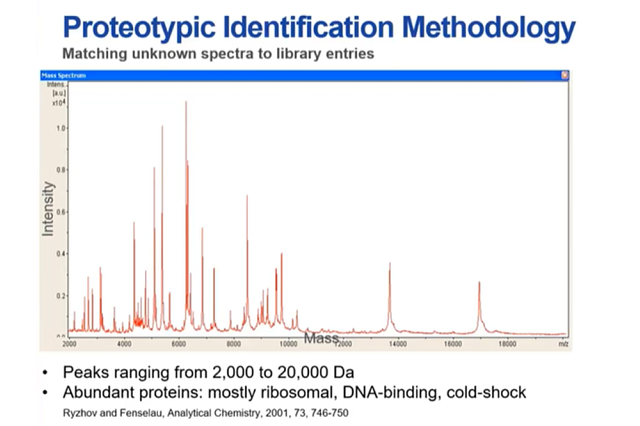
MALDI-TOF analysis begins with mass spectrometry, showcasing a spectrum of proteins within the 2,000 to 20,000 Da range. This spectrum indicates protein abundance, primarily ribosomal and housekeeping proteins, and forms the basis for microbial identification. However, this raw data undergoes transformation into a ‘peak list’, critical for generating accurate identifications.
The Crucial Role of Sample Preparation
Proper sample preparation is the bedrock of reliable MALDI-TOF results. This process involves:
- Selecting the Right Sample: Purity of the culture is paramount. Contaminants can skew results, leading to misidentification or no identification.
- Optimal Culture Age: The age of the microbial culture significantly impacts the protein profile. Typically, cultures less than 72 hours old yield the most accurate results.
- Handling and Processing: Gentle and precise handling is essential to sample integrity.
Growth Rate and Generation Time: Influencing Factors
The growth phase of microorganisms plays a critical role in MALDI-TOF analysis:
- Active Growth Phase: Samples taken during this phase generally provide the most reliable data, as protein expression is at its peak.
- Culture Age Impact: As cultures age, protein profiles change, affecting the match score. For instance, a 24-hour old culture of Micrococcus luteus may yield a different spectrum compared to a 72-hour old culture.
- Timing and Accuracy: Quick sampling during the optimal growth phase ensures the accuracy of the MALDI-TOF report.

Seminar: Exploring MALDI-TOF Mass Spectrometry for Microbiology
Available for a limited time, this seminar confronts the strengths and limitations of MALDI-TOF mass spectrometry as a reliable, compliant, and scalable option in quality control and environmental monitoring.
Watch Now
Understanding the Mass Spectra Library Match Score
The library match score is at the heart of MALDI-TOF analysis:
- Score Generation: The system compares the peak list of the sample against a database of known spectra, producing a match score. The match score ranges from 0 to 3.0.
- Score Interpretation: A higher match score indicates a strong match, suggesting a more accurate identification. Scores below 1.75 generally denote insufficient data quality or an organism missing from the library.
- Score Reliability: The match score reflects not just the number of matching peaks, but also their intensity and symmetry, making it a robust measure of identification accuracy.
Regulatory Expectations and Compliance
With updates to regulations like the EU GMP Annex 1, species-level identification of contaminants has gained paramount importance. MALDI-TOF, with its detailed and rapid identification capabilities, stands as a critical tool in meeting these regulatory standards. However, compliance is not just about using advanced technology; it’s about understanding and correctly interpreting the data it provides. Accurate microbial identifications lead to proactive measures, reducing costly deviations and ensuring continuous improvement and patient safety. While primarily used in sterile product manufacturing, the principles of MALDI-TOF analysis extend to non-sterile environments. The identification of objectionable organisms, as required by pharmacopoeias, is crucial in assessing risks to the product and ultimately the patient.
The Limitations of MALDI-TOF Analysis
While MALDI-TOF offers depth and detail, it’s not without limitations:
- Database Dependency: The accuracy of species identification is as good as the database used for comparison.
- Sample Quality Sensitivity: Poor sample preparation can lead to inaccurate results.
- Cultural Conditions Impact: Variations in growth conditions and culture age can significantly alter the protein profile, affecting the analysis outcome.
Case Study: The Impact of Culture Age on MALDI-TOF Results
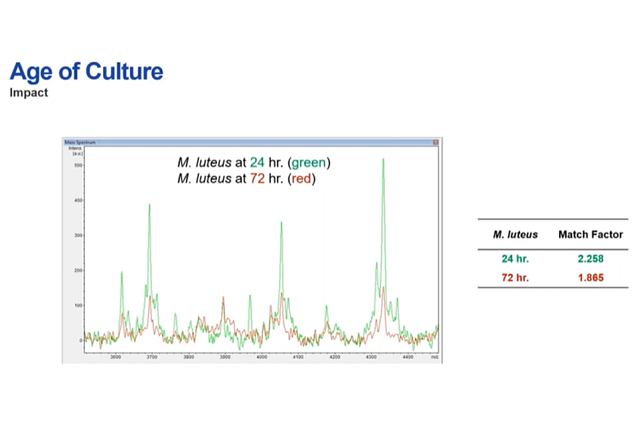
In the example above, Micrococcus luteus was tested at two time points, 24 hours (green spectra) and 72 hours (red spectra). The peaks change in height as the culture ages and when you look at the match factor, the match factor decreases depending on the age of the sample.
Studies such as the one involving Micrococcus luteus highlight how culture age can affect MALDI-TOF results. Variations in peak intensity and match factor underscore the need for precise timing in sample collection. Such findings emphasize the necessity for QC professionals to consider the age and growth conditions of cultures when preparing samples for MALDI-TOF analysis.
Navigating the Challenges of MALDI-TOF Interpretation
QC professionals and facility managers must be adept at interpreting MALDI-TOF reports. This includes understanding the nuances of the MALDI score, the impact of sample preparation, culture age, and staying updated with regulatory changes. Accurate interpretation is crucial for ensuring effective microbial identification, operational efficiency, and patient safety.
MALDI-TOF analysis reports, with their detailed insights, are indispensable in the pharmaceutical industry. However, their interpretation requires an in-depth understanding of the technology, its limitations, and regulatory expectations. As QC professionals, your expertise in accurately interpreting these reports is crucial for maintaining the balance between efficiency and safety, impacting product quality and patient welfare.
Accugenix® will interpret the report for you with a clear species-level identification.

Identification of Molds Using MALDI-TOF (MSD/Merck Case Study)
Discover how MALDI-TOF technology enables rapid, accurate identification of molds for contamination control and compliance. Learn from MSD why this method is transforming microbial ID in regulated environments.
Watch the Webinar

The Micro Keeps You in The Know
You don't need an agar plate to grow your microbial knowledge. Get industry updates, articles and other resources delivered straight to your inbox each month.
Subscribe