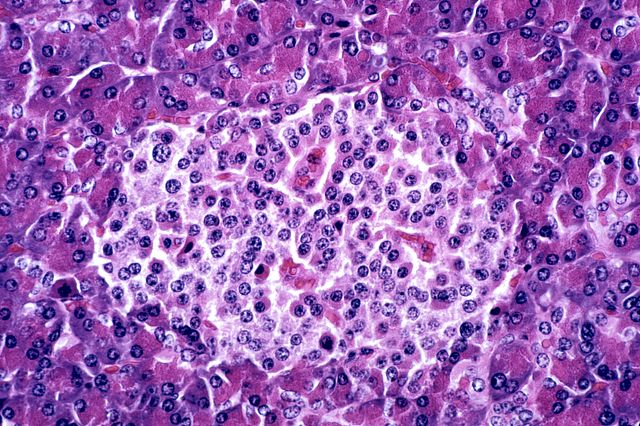
Tissue Cross-Reactivity Studies for Monoclonal Antibodies
We hold a full range of tissues from various animal species. As outlined in FDA guidelines, we store an array of human tissues from multiple donors sourced from ethically approved tissue banks with full patient consent. Our commitment to new and improved pathology techniques has led to the generation of highly specific mechanistic drug action/tissue response data critical to worldwide regulatory filings.
For immunohistochemistry-based tissue cross-reactivity (TCR) studies, we provide efficiency of scale in full compliance with Good Laboratory Practice (GLP) regulations and interpretation of findings and can represent you in presenting to the applicable regulatory agencies.

WEBINAR: Maximize Safer, Targeted Biologic Development with Smarter NAMs-Based Off-Target Screening
This webinar showcases how the Retrogenix® platform empowers smarter, earlier decisions across biologic formats. You’ll also learn how this platform, recently accepted into the FDA’s ISTAND Pilot Program, aligns with evolving regulatory support for NAMs and the shift toward reduced animal use.
Watch the Replay
Tissue Cross-Reactivity Services
We offer extensive support towards different services offered within TCR studies focusing on:
Preliminary TCR Studies:
- Homology Search
This in silico analysis compares the antibody's variable region sequence to known protein sequences. It helps identify potential cross-reactivity with human proteins based on sequence similarity. - Binding Assay Panels
These in vitro assays test the antibody's binding to a library of purified human proteins or synthetic peptides. This can reveal potential off-target interactions before animal studies. - Tissue Microarrays
Small-scale immunohistochemistry (IHC) staining of a limited panel of human tissues (e.g., major organs) can provide preliminary insights into cross-reactivity patterns.
Definitive TCR Study:
- Tissue Panel
This comprehensive study uses a panel of 37 frozen human tissues, representing a broad range of organ systems and cell types. This increases the chance of detecting potential off-target binding compared to preliminary studies. - Two Antibody Concentrations
Testing the antibody at multiple concentrations, typically low and high with the option to do additional concentrations, helps differentiate specific from non-specific binding. Lower concentrations identify high-affinity interactions relevant to potential toxicity, while higher concentrations help understand binding saturation and potential for competition with endogenous ligands.
Benefits of Comprehensive Tissue Cross-Reactivity Studies
- Improved Preclinical Safety Assessment
Early identification of off-target binding allows for antibody optimization or selection of alternative candidates, reducing the risk of adverse events in clinical trials. - Regulatory Compliance
Thorough TCR studies are required by regulatory agencies for Investigational New Drug (IND) or Clinical Trial Application (CTA) submission. - Enhanced Understanding of Antibody Mechanism
Identifying on-target binding in unexpected tissues can provide valuable insights into the antibody's mechanism of action and potential secondary effects.
I have worked multiple times with Charles River over the years, for services including tissue cross-reactivity studies (GLP or not) and toxicology studies. From the early stages of business interactions to evaluate the project and its planification, through study monitoring then report finalization. I have been nothing but extremely satisfied; that includes excellence of expertise, quality of the interactions, proactivity to solve issues, and keeping up with timelines.”
Helene Sicard, Director, Research, and Drug Development, Biotech - Paris, France
Additional Considerations in TCR Studies
- Species Selection
While human tissues are preferred, animal models with similar protein expression patterns may be used in preliminary studies for logistical reasons. - IHC Methodology
Different IHC techniques and detection systems have varying sensitivities and specificities. Careful optimization is crucial for accurate interpretation of results. - Data Analysis and Interpretation
Statistical analysis and expert evaluation are needed to distinguish specific binding from background staining and assess the potential clinical relevance of observed cross-reactivity.
By including preliminary studies, a definitive study with 37 tissues, three antibody concentrations, and samples from multiple human subjects, TCR studies provide a comprehensive assessment of an antibody's potential off-target effects, improving preclinical safety and paving the way for successful clinical development.
Our TCR studies include:
- Extensive controls
- Slide evaluation and interpretation
- Internal peer review
- In vitro cross-reactivity
- In vivo binding of test articles
- Analysis of potential treatment-related effects
- Potential immune complex deposition in kidneys
- Immunophenotyping
- Monoclonal preclinical safety
- Human
- Humanized
- Chimeric
- Murine
- Clinical trial support
- Entry criteria
- Biomarker
- Proof-of-principle
- Final Report