
USP <86> Overview
In May 2025, the US Pharmacopeia (USP) officially implemented the inclusion of Chapter <86>, Bacterial Endotoxins Test Using Recombinant Reagents.

Important Chapter <86> Insights:
- Details methods for bacterial endotoxin testing using non-animal-derived options like recombinant cascade reagent (rCR)
- Expands testing techniques beyond what Chapter <85> covers for bacterial endotoxins
- Outlines guidance for manufacturers looking to add these methods to their quality testing procedures
- Does not replace or alter the option to use Limulus Amebocyte Lysate (LAL) for endotoxin testing; Chapter <86> serves as an addition to Chapter <85>
Before the adoption of USP <86>, there was uncertainty about whether recombinant reagents would be accepted. As regulatory guidance was lacking, this left many laboratories hesitant to make the switch. Now, with clear guidance the industry can move toward recombinant reagents, knowing they are in line with industry standards.
Understanding Recombinant Reagents for Bacterial Endotoxin Testing for USP <86>
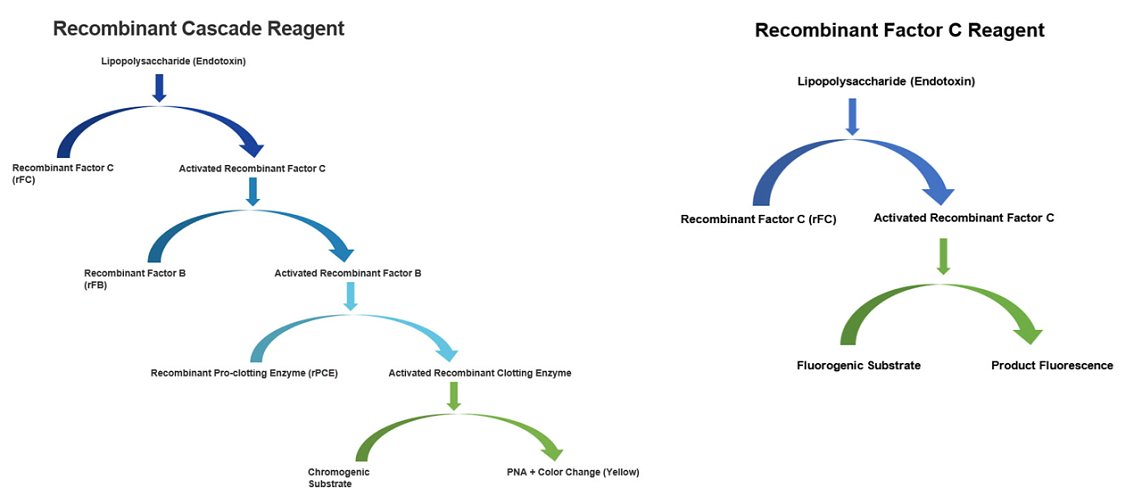
Recombinant reagents, are lab engineered alternatives to the traditional Limulus Amebocyte Lysate used in endotoxin testing. Unlike LAL, recombinant reagents are produced through synthetic biology, leveraging recombinant DNA technology to replicate the natural endotoxin response pathways. This synthetic process eliminates the need for animal-derived materials, supporting sustainability initiatives and ensuring reliable, consistent reagent performance.
Types of Recombinant Reagents:

Key Considerations for Selecting a Recombinant Reagent Solution:
- Ease of Implementation: A solution should integrate smoothly into lab workflows to minimize disruptions during the transition.
- Ease of Use: A user-friendly setup simplifies testing, from sample preparation to interpreting results, allowing teams to focus on other critical tasks.
- Sensitivity and flexibility: Endotoxin testing requires various sensitivities for diverse sample types.
- Vendor support: Selecting a provider with comprehensive support, including training, troubleshooting, and ongoing guidance, is essential for maintaining effective operations.
With multiple testing methods available, it can be challenging to know which best fits your lab’s needs. This tool is designed to help you evaluate your specific requirements to identify the most suitable testing method; optimizing efficiency and ensuring accurate, reliable results.
Evaluating Recombinant Options
USP Chapter <86> Guidance on Validation and Compliance
Ensuring reliable and compliant endotoxin testing hinges on validating recombinant reagents. Without validation, recombinant cascade reagents (rCR) and recombinant Factor C (rFC) may lack the accuracy and consistency needed for quality control. Validation assesses sensitivity, specificity to endotoxins, and reproducibility, confirming that alternative methods align with regulatory and operational standards. However, validating these methods requires significant resources, involving protocols, extensive testing, data analysis, and detailed reporting—a process that can take months to complete.

That is why we surveyed our QC pharmaceutical customers to discover exactly what they were being challenged by in their endotoxin method validation process, and they responded:
- Regulatory concerns: A lack of harmonized guidelines often causes delays in approval and implementation.
- Resource demands: Manual, labor-intensive processes drain time and personnel, leading to high resource utilization and slowing the pace of progress.
- Sustainability pressures: Growing environmental expectations add complexity, impacting efficiency and safety.
Laboratories face delays and frustration when adopting new testing methods. To streamline validation, a simple three-step process for alternate method validation can help:
- Product specific interference screening: Manufacturers must perform tests to detect any interference unique to their products, ensuring the recombinant reagent functions effectively.
- Recombinant primary validation: Vendor documentation includes protocols, results, and statistical analysis, demonstrating recombinant accuracy and reliability.
- Product specificity: Laboratories validate that the recombinant reagent accurately detects endotoxins across various matrices, confirming the method’s suitability.
Some laboratories may require more detailed information or a clear, step-by-step guide to validation. To address this need, we have developed a webinar that guides quality control professionals through the entire validation process, providing practical guidance on ensuring the selected recombinant detects both relevant and natural environmental endotoxins. In addition, viewers will receive an accompanying tech sheet including key data from internal beta studies, offering comprehensive support for implementing these methods confidently in any laboratory setting. Whether validation is performed in-house or outsourced, these resources simplify the process and provide clarity.
Ready to get started? Our experts are here to help you take the next step.
Partnering for Success with Recombinant Solutions in Line with USP <86>
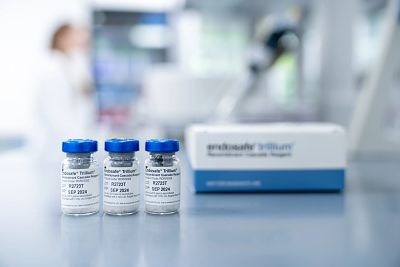
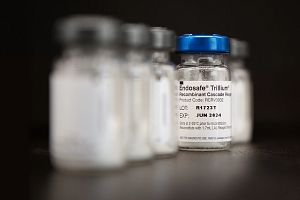
Transitioning to recombinant endotoxin testing can be daunting, and choosing the right partner is key to making it work for your lab. With Endosafe® Trillium™ rCR cartridges and reagents, you are equipped with a solution that meets the highest regulatory standards, while boosting testing accuracy and efficiency.
If you are ready to transition to a more sustainable endotoxin testing solution, Endosafe Trillium offers the simplicity, accuracy, and support your lab needs to stay ahead without compromising on performance.
Best Practices for rCR Vial and Cartridge Adoption
Uncover how to standardize your testing, reduce invalid results, and stay compliant with Trillium™ recombinant cascade reagents (rCR) vials and cartridges.
View the Guide
Further Reading
The Road to Recombinant Testing:
- The Evolution of Eco-Conscious Endotoxin Testing | [Article]
- Tracing the Regulatory Evolution of Recombinant Testing | [Article]
- Recombinant Factor C Assay: Under the Microscope | [Blog]
- Testing with a Recombinant Cascade Reagent | [Blog]
- The Impact of USP Chapter <86> on Endotoxin Testing | [Interview]
- A Q&A on USP <86>, Recombinant Innovation, and Future Trends | [Article]
Practical Guidance for Recombinant Method Validation:
- Understanding Validation and Implementation of rCR | [Webinar]
- Your Step-by-Step Path to Recombinant BET Validation for Trillium™ rCR | [Training]
- rCR Beta Study | [Technical Report]
Understanding Cartridge Technology and Systems:
- Endotoxin Testing Systems | [Webpage]
- Endosafe Cartridge Technology | [Brochure]
- Endosafe® Trillium™ rCR Launch | [Webpage]
USP <86> FAQ
-
What is the U.S. Pharmacopeia (USP)?
The USP is an independent, scientific nonprofit organization dedicated to ensuring the safety and quality of medicines. For more than 200 years, USP has established trust by setting public quality standards for medicines, dietary supplements, and food products. These standards help safeguard patient health and ensure the quality of products worldwide.
-
What is USP Chapter <86>?
USP Chapter <86> outlines the guidelines for the use of non-animal-derived reagents for endotoxin testing. This includes methods that use both recombinant cascade (rCR) and recombinant Factor C (rFC) reagents. It provides updated standards for manufacturers of new and existing pharmaceutical products on how to incorporate them into their quality testing.
-
When can I start?
Publication for early adoption will be released in November 2024 and will become official in May 2025.