
Scientifically Sustainable Endotoxin Testing
A robust, animal-free recombinant cascade reagent (rCR), Endosafe® Trillium™ is the latest addition to our trusted and industry-leading Endosafe portfolio, and was developed with superior science, and designed for sustainable progress in the lab. As an optimized kinetic chromogenic reagent curated to simulate the natural LAL reaction, the formulation and composition of Trillium includes the three critical biological proteins (recombinant Factor C, recombinant Factor B, and recombinant proclotting enzyme) and a specific concentration of key components.

Webinar Series: Introducing Endosafe® Trillium™ rCR - Understanding Validation and Implementation
Across two one-hour webinars, we will explore how Trillium detects and quantifies natural environmental endotoxins by simulating the LAL enzymatic cascade.
Watch Now
This enriched, animal-free assay for bacterial endotoxin testing provides confidence and safety in product manufacturing while simultaneously strengthening a united commitment to the 3Rs and sustainability initiatives.
Using the Endosafe® Trillium™ rCR cartridges alongside our routine testing was straightforward for our technicians, as the test method remains identical, and the results are reported the same way. We were pleased with the technology implementation, quality of data, and onboarding as it was simple and seamless, which is ideal when introducing such an impactful change in the microbiology lab. We look forward to moving to Endosafe® Trillium™ rCR cartridges for routine testing later in the year as part of our environmental sustainability efforts.”
Greg White, Microbiology Laboratory Supervisor & Blackpool STEM Lead, DePuy Synthes International
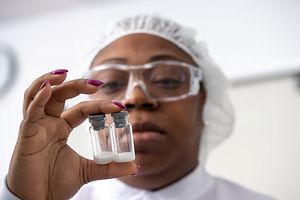
BET Sensitivity Errors Often Start Before Testing Begins
Interference, dilution, and product limits can all affect whether endotoxin remains detectable during testing. Learn how labs choose the right BET assay sensitivity for different applications.
View the Resource
Complete Cascade Confidence:
Specific to Natural Environmental Endotoxins →
- Proprietary matrix ensures accurate recovery of relevant and natural environmental endotoxins
- Demonstrates assay superiority in comparability and robustness compared to single protein recombinant technologies.
- Formulation of the three critical proteins developed using samples containing natural endotoxin found to ensure accurate recovery and equivalency to LAL
Testing Method & Instrument Familiarity →
- Kinetic chromogenic method is compatible with incubating absorbance plate readers, EndoScan-V™ software, and accessories
- Reduces methodology training and qualifications
- Eliminates additional capital investments
- Supports recycling initiatives of electronic lab instrumentation waste
Product Specifications →
- Quantitative range of 0.001 to 100 EU/mL, offering exceptional sensitivity and reliability
- Eliminates the potential for 1,3-β-D-glucans, reducing the risk of false positives
- Reagent Stability up to 4 hours at 2-8°C
- Pack of 6, 32-test vials
Alternative Validation Support →
- Primary Validation Documentation: including protocols and a primary validation summary report
- Contract Testing Services: for Interference Screen
- Our Technical Teams: have experience in successfully validating alternative microbiological methods (Celsis)
- Request More Info
Replace, Reduce, Refine: Achieving Sustainability
Today, organizations worldwide are pursuing animal-free options to ensure the longevity of their supply chains and business operations while maintaining a strong commitment to corporate citizenship. We continue to reaffirm our commitment to and compliance with the 3Rs imperative, as we partner on your journey toward ensuring laboratory, patient, and environmental safety through responsible and sustainable practices.


Endosafe® Trillium™ rCR Technical Report
To further demonstrate the robustness and validity of our Trillium rCR matrix and formulation, we published a technical report detailing the results of our comprehensive beta test study program. The report highlights assay equivalency to our FDA-licensed kinetic LAL assay via our primary alternate method validation.
Download the Report
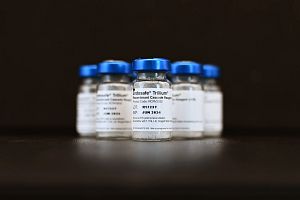
Build a recombinant BET validation plan module by module
A documented validation plan can be the deciding factor in adopting recombinant BET methods. This four-part series covers study design, acceptance criteria, and interference testing.
Start Training Now
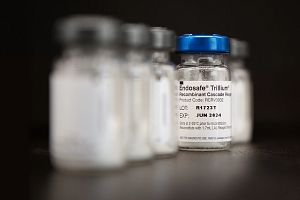
Best Practices for rCR Vial and Cartridge Adoption
Uncover how to standardize your testing, reduce invalid results, and stay compliant with Trillium™ recombinant cascade reagents (rCR) vials and cartridges.
View the Guide
Ordering Information:
-
Product Descriptions and Codes
Product Type Product Code Description Reagent RCRV3032-PK Trillium rCR Vials, 6 pack (32-tests/vial) Documentation VALRCR3100 Trillium rCR Primary Validation Documentation Contract Test Service TSRCR3300 Trillium rCR Interference Screen Contract Testing Services TSRCR3401 One Batch Product Specificity Contract Testing Services TSRCR3403 Three Batch Product Specificity
Frequently Asked Questions:
-
How is Trillium recombinant cascade reagent (rCR) different from naturally occurring LAL?
Our recombinant cascade reagent uses recombinant DNA technology to produce the critical biological proteins of LAL using lab-engineered alternatives. Trillium simulates the natural LAL reaction through an optimized formulation of three critical biological proteins (Recombinant Factor C, Recombinant Factor B, and Recombinant pro-clotting enzyme). This proprietary matrix demonstrates assay superiority in accuracy, comparability, and robustness compared to other recombinant endotoxin detection technologies and our primary validation data in water supports the claim of equivalency to LAL.
-
How is Trillium different from Recombinant Factor C (rFC)?
Trillium utilizes a 3-Factor enzymatic cascade formulation that mimics the reaction as a traditional LAL cascade. rFC is an endpoint method and only contains a single protein in the cascade. Trillium has been specifically developed to provide the highest quality results among recombinant technologies. Products like rFC, that contain only one enzyme, require external amplification obtained by a fluorescence reader, and does not mimic the natural LAL amplification enzyme cascade. Utilizing a product that requires fluorescence amplification requires the end users to purchase new equipment, onboard and train users, and employ a completely different methodology.
-
Will Trillium replace LAL, or will this be in addition to LAL?
Trillium rCR is an animal-free addition to our bacterial endotoxin detection portfolio. Not all products may work with recombinant technology, and therefore, we will continue to manufacture LAL.
-
Why is Trillium recombinant cascade reagent now an option after rFC and other rCR’s have been available?
Bringing Trillium recombinant cascade reagent to market gives customers an animal-free option that closely resembles what has been tested and proven in nature (LAL). Our research and product development team have spent an abundance of time truly understanding the sensitivity and composition of our formulation and the severe impact on potential for underestimation of endotoxins. As all formulations are different from vendor to vendor, the slightest change can alter the ability to detect or not detect natural environmental endotoxins. So as scientists do, we tested, challenged, and tested again to ensure the highest quality product for our customers.
-
Will Charles River Laboratories continue to collect horseshoe crabs?
Our team remains vigilant and committed to our 3Rs initiative and horseshoe crab sustainability efforts. Our recombinant technology allows us to optimize our resources while continuing our mission to reduce reliance on the horseshoe crab by innovating our formulations and microfluidics technology to enrich the LAL assay. LAL is still necessary to manufacture as recombinant technologies are not able to be utilized on all products, so we are committed to collecting this valuable natural resource in a safe and humane manner that is both environmentally sustainable and ensures medical treatments are safe for patients around the globe.
-
Is Trillium rCR by Endosafe as good as naturally occurring LAL?
As with all commercially available recombinant technologies for BET, Trillium recombinant cascade reagent does not yet have the years of comparative data laboratory experts have come to rely on that shows the high level of accuracy of the natural variation. Our primary validation data supports the claim of equivalency to LAL. Users would need to perform their own product-specific alternate method validation.
-
How can Charles River Laboratories help me validate Trillium?
We provide a pathway to faster submission and implementation with a primary validation support package that includes protocols and a primary validation summary report. With over 40 years of endotoxin testing, troubleshooting, and methods development experience, our skilled technical teams are an extension of your team, providing guidance and support throughout your implementation.
-
Trillium is not regulated by the FDA, so what manufacturing standards will Charles River Laboratories follow to produce Trillium?
Today, the FDA will not currently license recombinant reagents in the same way they license LAL. We will continue to work with the FDA in an attempt to have recombinant reagents regulated. As an FDA-regulated facility, we follow the same quality control and manufacturing protocols as we do for our licensed reagents, and welcome our customers to audit our facility and process as necessary.
-
What is the Global Regulatory Status of rCR?
It's important to note that global regulatory bodies recognize recombinant cascade reagents as a valid alternative testing method to traditional, compendial bacterial endotoxin testing methods. Trillium rCR meets stringent validation requirements, providing comparable results to the compendial method. By partnering with us, you can have confidence in meeting regulatory standards while driving sustainability forward.
-
What does it require for an initial capital investment?
Trillium is a kinetic chromogenic method and is compatible with existing incubating absorbance plate readers, Endosafe® EndoScan-V™ software, and testing accessories, reducing the learning curve, creating cost efficiencies, and making testing easier and more reliable. This allows customers to eliminate additional capital costs and fully supports recycling initiatives of electronic lab instrumentation waste.
-
Do you offer custom assay and method development support?
Yes, we provide comprehensive method development through our Technical Services team to customize assays and to optimize the implementation and use of Trillium for your lab. Our team specializes in laboratory research, focusing on custom assay development that is tailored to optimized recombinant technology for your bacterial endotoxin testing.