
Traditional Kinetic Chromogenic Assay Reagents
Endochrome-K, our traditional LAL kinetic chromogenic assay (KCA) facilitates your endotoxin screening with its ease of use. Featuring an optimized 0.005 EU/mL sensitivity*, our traditional kinetic chromogenic assay reagent provides heightened sensitivity for more accurate results, greater linearity for endotoxin analyses, and superior interference resistance. Our traditional LAL kinetic chromogenic reagent is designed to enhance your kinetic chromogenic assay and rapidly deliver accurate results.
*Lower sensitivity lots available on request, reach out to your local representative if you require a more sensitive lysate.
As part of our mission to provide scientifically sound and sustainable solutions, we've developed and optimized a robust, animal-free kinetic chromogenic rCR bacterial endotoxin detection assay curated to simulate the natural LAL reaction. Learn more about going animal-free.
-
Endosafe® Kinetic Chromogenic LAL Reagents
Product Code Endochrome-K™ kit - 256 tests
(sensitivity= 50-0.005 EU/ml)
8 X3.2 mL vials
2 X 10 ng control standard endotoxin
3 X 30 mL LAL reagent waterR1708K Endochrome-K™
(sensitivity= 50-0.005 EU/ml)
3.2 mL vialsPack of 10 - R17100PK
Box of 100 - R17100BX
Endpoint chromogenic kit (140 tests)
5 X 1.4 mL vials of chromogenic LAL
1 X 10 mg vial of chromogenic substrate S-2423
2 X 2 ng vials of endotoxin
2 X 30 mL vials of LAL reagent water
1 X 15 mL 0.05 M vial of Tris bufferR160K
Endotoxin Test Methods Comparison
Today’s business environment demands agile, flexible, and resilient operations, which are directly dependent on the ability to test smarter and faster. Is your lab bottlenecking advancement with manual sample prep, subjective interpretation, siloed data, and rigid workflows?
Identify your Ideal Workflow
Frequently Asked Questions (FAQs) About LAL Kinetic Chromogenic Assays
-
What is the difference between the LAL kinetic chromogenic assay and LAL kinetic turbidimetric assay?
Both the kinetic chromogenic assay and the kinetic turbidimetric assay are used to detect the presence of endotoxins – one by color, and one by turbidity. When the kinetic chromogenic LAL reagent reacts with endotoxins, the reagent turns the mixture yellow. Kinetic turbidimetric assays uses the change in turbidity to detect the presence of endotoxins.
-
What endotoxin testing instruments can be used with the LAL kinetic chromogenic assay?
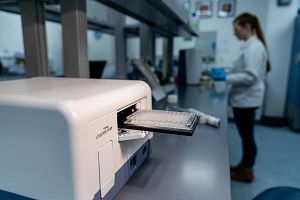
We offer a number of testing platforms that are compatible with the kinetic chromogenic assay. The Endosafe® nexgen-PTS™, Endosafe® nexgen-MCS™, utilize rapid chromogenic LAL assays and are designed for ease-of-use and compatibility. Additionally, traditional kinetic chromogenic LAL can be run utilizing the Endosafe® PRS 3 Microplate Reader.
-
How does the LAL kinetic chromogenic assay work?
The LAL kinetic chromogenic assay works in the presence of a colorless substrate when the enzymatic reaction will cause a yellow color to develop upon cleavage of the chromophore, p-nitroaniline (pNA). pNA liberation can be measured spectrophotometrically.
-
Where do I find verification that the kinetic chromogenic LAL assay is a compendial method?
The kinetic chromogenic LAL assay is a compendial method per USP<85> or Ph.Eur.<2.6.14>.
Is Your BET Program Sustainable?
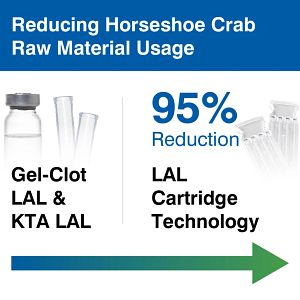
We recognize every organization has their own directives on how to embrace the 3R principles while ensuring product quality and patient safety. Our extensive portfolio has transformed the way we approach endotoxin detection, each offering their own degree of sustainability while allowing us to further optimize our resources and continue our shared journey to reduce reliance on the horseshoe crab.
Embrace Greener Techniques