
DIO Mouse Models and Obesity Studies
Through the use of specific diets, appropriate positive controls, and a robust suite of analytical endpoints, researchers can focus on certain aspects of obesity and related metabolic syndrome endpoints. Our diet-induced obesity (DIO) mouse models can accommodate your metabolic syndrome studies. Our models track aspects as simple as weight gain to complex comprehensive metabolic profiling, body composition, accurate acute food intake, and a range of histological markers.
We offer well-qualified diet-induced obesity models for your metabolic research, providing comprehensive assessment of therapies designed to treat obesity and its comorbidities. Our expert scientists specialize in gold standards of care. We offer the following diet-induced obesity models and metabolic syndrome studies:
- DIO mouse model (Diet-induced obesity model in C57BL/6 mice)
- Zucker Fatty Rat Model
- Diabetic Complication Model
- In vitro obesity and metabolic syndrome cell models
Customizable model development is also available to assess PK/PD relationships and target engagement. All metabolic syndrome studies are supported by biomarker analysis, immunology, pharmacokinetics, and pathology services. In vivo IVIS imaging is available to follow cell and gene therapies.
To further support your cardiovascular and metabolic research, we offer MASH models, Type 1 and Type 2 diabetes services, glucose tolerance testing, and dyslipidemia and atherosclerosis models.
Diet-Induced Obesity Studies in Mice
To support your metabolic drug discovery, we employ the C57BL/6 DIO model, which develops obesity, insulin resistance and glucose intolerance. The efficacy of your test article can be measured against various obesity-related readouts and biomarkers:
- Monitoring of body weight
- Quantification of changes in body composition via qNMR/EchoMRI
- Assessment of disease-related biomarkers such as glucose, insulin, and serum and tissue lipids
- Microbiome Studies
- Assessment of PK/PD relationships
-
C57BL/6 DIO Mouse Model Validation Data:
Effect of Standards of Care on Body Weight in C57BL/6J DIO Mouse Model
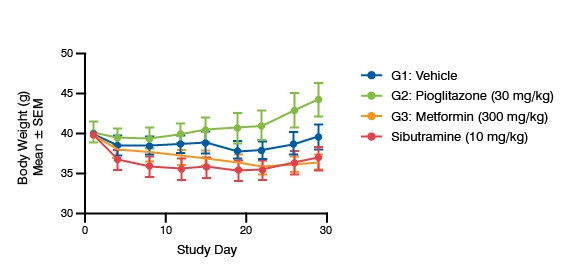
Male DIO mice (18wks of age at study start) were treated with the test articles (PO; QD) for 28 days.
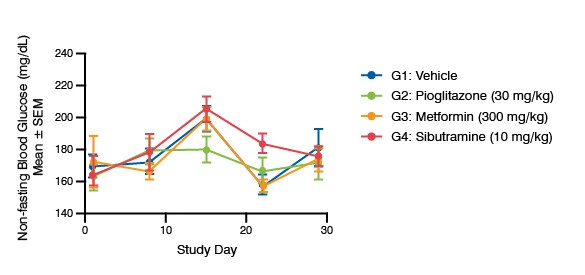
Effect of Standards of Care on Non-Fasting Blood Glucose
in C57BL/6J Diet-induced obesity Mouse Model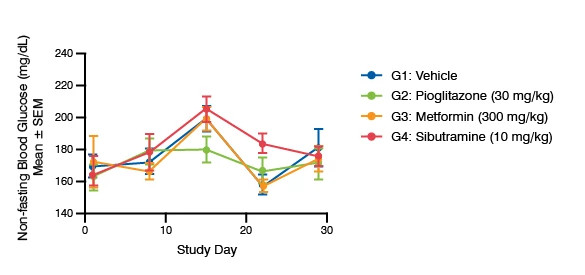
Male DIO mice were treated with the test articles for 28 days to determine the effect of non-fasting blood glucose levels.
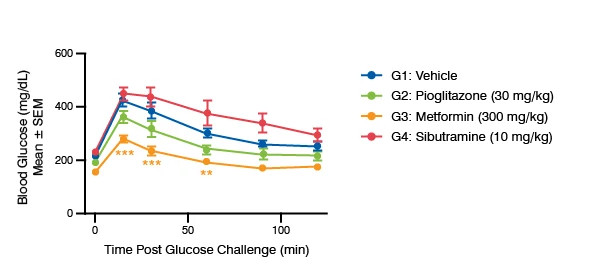
Time Post Glucose Challenge in C57BL/6J DIO Mouse Model
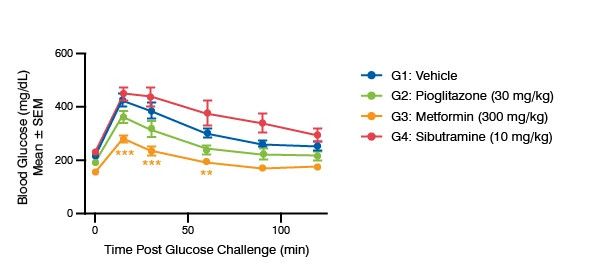
Blood Glucose levels (mg/dL) were measured in minutes to determine the time post glucose challenge (min) in DIO mice.
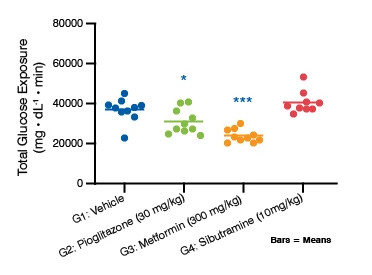
Effect of Standards of Care on Glycemic Control in C57BL/6J Diet-induced obesity Mouse Model
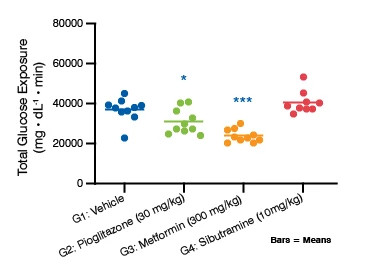
Data shows total glucose exposure for different compounds showing the effect of Glycemic Control in C57BL/6J DIO Mice.
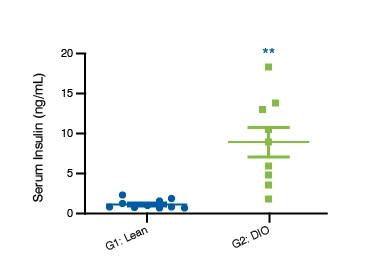
C57BL/6J DIO Mice are Hyperinsulinemic
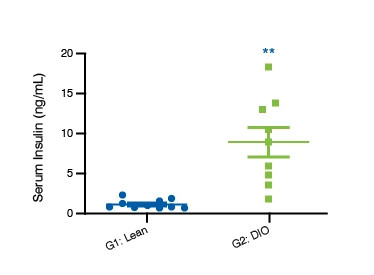
Graph shows serum insulin levels for lean control mice and C57BL/6J DIO Mice
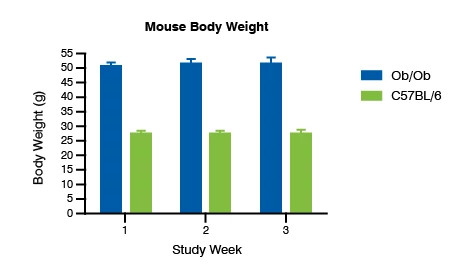
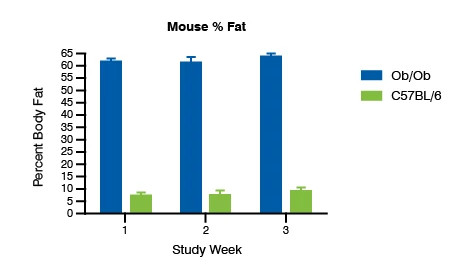
qNMR Assessment of Body Composition Better Reflects Large
Differences in Adiposity When Compared to Body Weight in DIO Mouse Model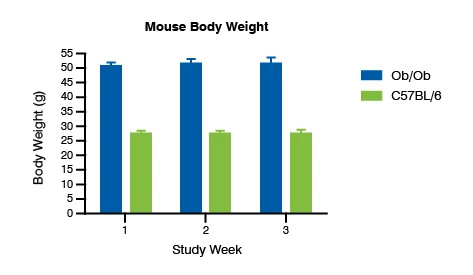
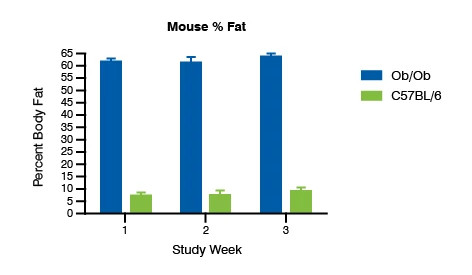
The qNMR Assessment of Body Composition shows that the C57BL/6J DIO mouse model has a much lower body fat percentage than the ob/ob mouse model.
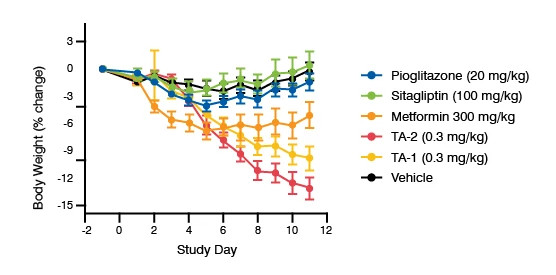
Change in Body Weight Composition for the C57BL/6J Diet-induced obesity Mouse Model
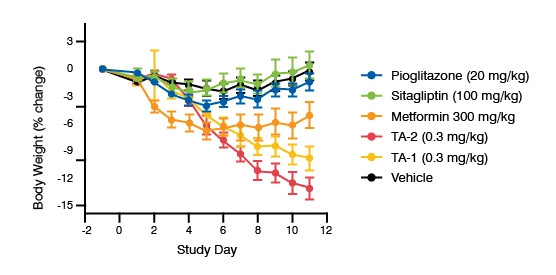
Graph shows reduction in body weight in DIO mice
Body Composition in DIO Mice after 14 Days on HFD
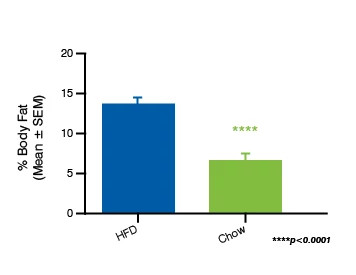
Rapid, 14-day protocol to assess effects potential therapeutic agents on body weight loss.


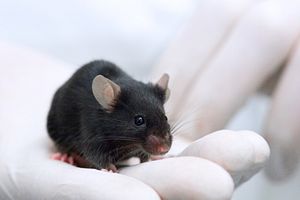
Do you need C57BL/6 DIO Mice or other study-ready rodent models?
Obtain animal models with various pre-fed diets depending on your study needs.
Find out More
Zucker Fatty Rat Services
The Zucker fatty rat (ZFR) has been used in metabolic disease research for decades. With related phenotypes of metabolic disease centered around impaired leptin signaling, these strains can be used to provide a rich dataset for investigators looking to assess the efficacy of lead candidate therapies for this multifactorial disease.
The ZFR strain presents as an obese, insulin-resistant, glucose-intolerant animal model. The strain has been used to investigate various treatment modalities addressing appetite suppression, weight loss, restoration of insulin sensitivity, and reduction of hyperlipidemia. Animals display an elevated serum lipid profile, hyperinsulinemia, and depressed basal and insulin-stimulated glucose transport. Obesity is evident in this strain between 3-5 weeks of age and occurs in the face of restricted feeding and is of a hypertrophic/hyperplastic type. The phenotype is driven by defective leptin signaling.
Diabetic Complication Models
It is increasingly evident that approval and clinical success of agents treating diabetes can no longer rest on changes in glucose control alone.
What is clear is that the real cost of the disease, both in financial and physiologic terms, comes from complications that attend uncontrolled or poorly controlled glycemia. Virtually all organ systems are impaired in the face of diabetes.
We are keenly aware of this issue and have continued investigating internally by validating new wound-healing models, examining the effects of diabetes on bone health in rodent models, and ensuring that our histological endpoints of the inflammatory side of diabetes are up to speed with the literature.
In Vitro Obesity Models and Metabolic Syndrome Cell Models
In addition to the established animal DIO mouse models and rat models, we also offer a variety of in vitro assays to study multiple aspects of obesity and metabolic syndrome across diverse modalities (small molecules, biotherapeutics [e.g. antibody incl. multi-specific, nanobodies, peptides, proteins, PROTAC, LYTAC], antisense oligonucleotides, mRNA, etc.). Models are established in disease-relevant cell models, using human primary adipocytes, hepatocytes, skeletal muscle cells, or pancreatic cells.
-
In Vitro Obesity Models Data
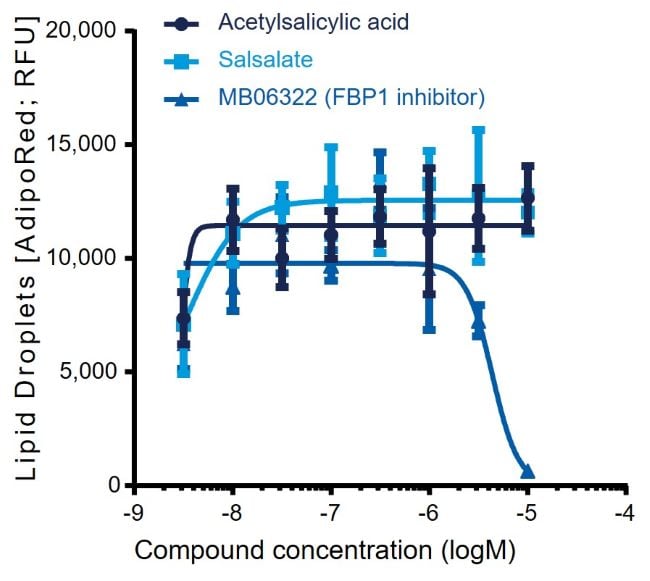
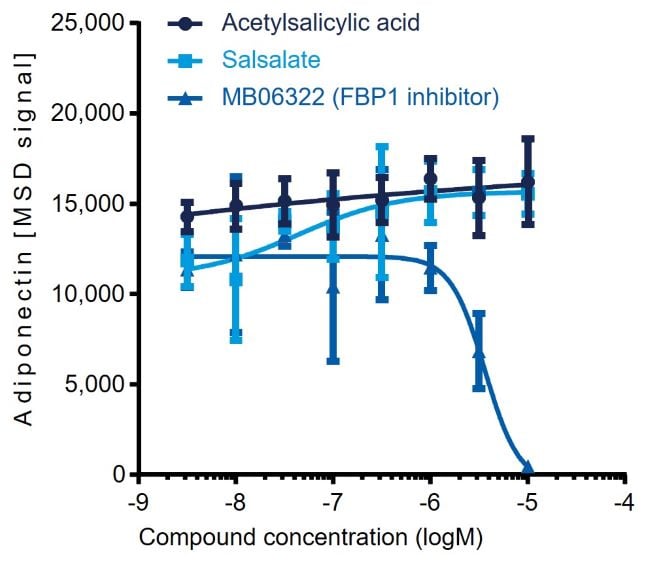
As an example in human primary adipocytes, the Lipid droplet accumulation/Adiponectin secretion dual readout assay allows identification of test articles leading to a decrease in intracellular lipid droplet accumulation and the upregulation of adiponectin secretion in a single cellular setup.
Reference compound performance in Lipid droplet accumulation/Adiponectin secretion dual readout assay
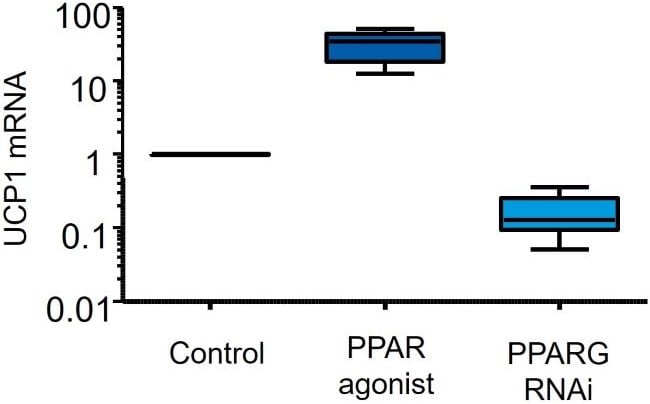
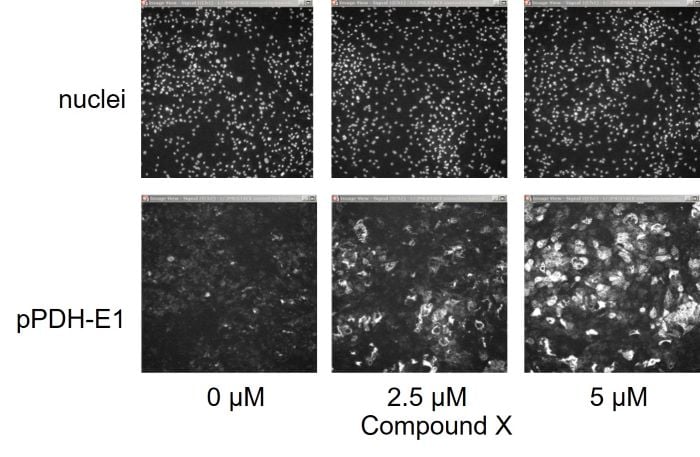
Weight loss might be achieved by pharmacologically inducing lipids-storing adipose cells to adopt characteristics of brown adipocytes that consume lipids to produce heat. We offer a model to identify small molecule inducers of UCP-1 expression (a prominent marker of brown adipocytes) in adipose tissue from T2D patients. In addition, we provide cell models measuring lipolysis, or Mitochondrial Pyruvate Dehydrogenase (PDH) activity.
Functional validation of the Browning/UCP1 mRNA assay in human primary adipocytes
Reference compound performance in PDH activity assay. The PDH assay is suitable to identify both activators and repressors of mitochondrial PDH activity.
If you have any questions on our obesity models, please reach out.
Optimize your Metabolic Program
Frequently Asked Questions (FAQs) About Obesity Models
-
Which animal models can be used to study obesity?
There are many animal models of obesity available, including genetically modified models or obesity models which are induced by diet (DIO mouse models or diet-induced obesity models). Examples include the DIO mouse model in C57BL/6J mice and Zucker fatty rat models. The choice of model will depend on the goal of the study, and this is something Charles River’s scientists can help advise on.
C57BL/6 DIO mice, metabolically similar to humans, have proven essential in obesity studies. DIO mice are favored for diet-induced obesity studies because of their genetic predisposition for weight gain when fed a high-fat diet.
-
Are there in vitro models of obesity?
In addition to animal models of obesity (such as DIO mouse models) there are also in vitro assays available to study obesity and metabolic syndrome. This includes the lipid droplet accumulation/Adiponectin secretion dual readout assay offered by Charles River.