The Importance of Drug Hepatic Uptake and Partitioning
The liver plays a key role in determining most drugs' bioavailability, efficacy, and clearance via diverse mechanisms. Hepatic clearance may be altered by drug interactions affecting drug metabolizing enzymes and membrane transporters. In addition, transporters can affect the tissue concentrations of drugs, including hepatic uptake and accumulation, and therefore affect their pharmacological and/or toxic effects, without necessarily affecting systemic exposure1. Clinically relevant drug-drug interactions (DDIs) leading to changes in systemic exposure of these drugs are primarily attributed to the inhibition of hepatic uptake transporters2.
Determination of tissue-specific unbound drug concentrations and partitioning coefficients, such as hepatic Kpuu values, can enhance predictions of drug distribution and its potential effects across various organs. Understanding the liver interactions of a new drug entity is essential to achieving sufficient plasma exposure to modulate targets effectively and safely.
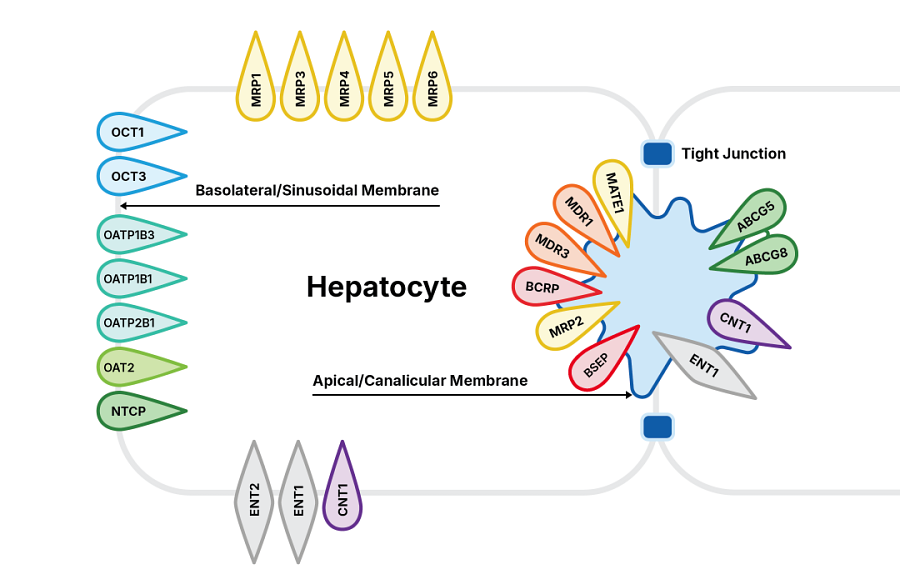
Figure 1. Summary of the major ABC pumps and SLC uptake carriers expressed in the liver, including their primary placement in differentiated hepatocytes and the primary direction of transport.
The importance of understanding hepatic drug handling
ADME-Tox properties of new drug entities are usually first examined in preclinical species to obtain preliminary data for safe and reliable dosage in clinical trials. Transporter-mediated hepatic uptake is often a determining step in systemic exposure and clearance of drugs. As expression, substrate specificity, and kinetic parameters of hepatic uptake transporters are known to differ between species, comparative characterization of the in vitro active and passive uptake clearance rates in hepatocytes from human versus preclinical species has outstanding importance for early drug development4.
Systemic drug concentration is commonly applied as a primary metric for predicting exposure and interactions within the body, but this approach may overlook the potential accumulation of drugs in specific organs. Determining tissue-specific unbound blood-to-organ partitioning coefficients (Kpuu) offers a more nuanced understanding of drug distribution, particularly in the liver, which significantly influences drug metabolism and clearance. Factors such as transport mechanisms, metabolism, and cellular conditions can affect hepatic Kpuu values, ultimately impacting the drug's overall hepatic clearance and downstream processes.
Hepatic Uptake Assessment in Hepatocytes
For projects in earlier stages of development, hepatic uptake is often tested in a screen-like format using cells from human and/or preclinical species to gather basic information on hepatic handling of multiple compounds or series, and differentiate between passive and active uptake processes, if any. In a later stage, more complex assay setups, potentially also deploying transporter inhibitors, can be applied for mechanistic investigation of hepatic uptake mechanisms, identification of any species differences, and to drive transporter selection for subsequent in vitro DDI studies.
Hepatic uptake is predominantly tested in vitro using hepatocyte cultures to evaluate the uptake of a test compound into hepatocytes. In these assays, both active (transporter-mediated) and passive (diffusion) hepatic uptake mechanisms are addressed. There are several approaches to determine hepatic uptake in vitro; however, the common principle involves separation of cells and media and monitoring of drug concentrations in either the cells or in both. In vitro uptake assays can be performed by using multiple formats – suspension (oil-spin method), plated hepatocytes, or sandwich cultured hepatocytes.
It has been demonstrated that the uptake rates (Km), as well as the IC50 values of selected probe substrates and inhibitors, respectively, were comparable across the three assay formats. Due to its easier handling and better adaptability for screening-like studies, the go-to approach to hepatic uptake assays is the plated format, while the oil-spin approach is also viable. Sandwich-cultured hepatocytes represent a more complex assay system that allows investigation of both hepatic uptake and efflux and are run in custom setups.

How Modern CROs Accelerate Your Drug Development
Are you facing delays, bottlenecks, or rising costs in your drug development process? In this webinar, you will learn how leading CROs overcome these challenges with innovative strategies. Gain insights that can directly impact your timelines, reduce risks, and streamline your path to approval.
Watch the Replay
Sandwich-Cultured Hepatocytes for Hepatic Uptake Testing
Healthy, primary sandwich-cultured hepatocytes (SCH) form functional bile canaliculi expressing a full complement of efflux and uptake transporters. B-CLEAR® technology utilizes a patented process to modulate the integrity of tight junctions at the interface of the canaliculi and the culture medium, releasing the contents and allowing measurement of biliary excretion and efflux.
These cultures maintain many of the structural and functional features of in vivo hepatocytes, including formation of bile canaliculi, excretion of bile acids, expression of drug metabolizing enzymes, and expression and localization of efflux and uptake transporters. Sandwich-cultured hepatocytes are therefore a powerful in vitro tool that can be utilized to study drug metabolism, species differences in drug transport, transport protein regulation, drug-drug interactions, hepatotoxicity, and, most specifically, hepatobiliary drug transport.
As an improvement to the “traditional” B-CLEAR assay, we developed a vectorial efflux assay, where the uptake and efflux processes are measured separately. This enables the assessment of the uptake, as well as basolateral and biliary efflux of compounds at once, in a single experiment, in addition to biliary clearance evaluation.
Hepatic Kpuu Determination
When predicting a drug’s fate and interactions in the body, the most applied metric is its concentration in the circulation to estimate systemic exposure and deduce downstream mechanisms such as tissue-specific permeability and elimination processes. The systemic cmax, or, if available, the unbound fraction (plasma fu) is also applied as a reference when selecting concentration ranges to test in various in vivo and in vitro interactions, as only the unbound fraction (fu) of a compound can interact with transport proteins and metabolic enzymes. This approach, however, does not consider the possible accumulation of the drug into specific organs, where, consequently, the local intracellular drug concentrations may exceed its plasma levels even by magnitudes.
Determination of tissue-specific unbound blood-to-organ partitioning coefficients – Kpuu values can provide a more complex understanding of a compound’s systemic distribution and offer a more realistic basis for predicting (or explaining) downstream effects. While Kpuu values may be established for multiple organs of interest, hepatic partitioning is one of the most studied aspects due to the central role of the liver in drug disposition and excretion, including its function in first-pass metabolism, in the overall metabolic and biliary clearance processes but also as a target organ for multiple indications.
Hepatic Kpuu of a compound is influenced by multiple factors and processes, including its active and/or passive transport mechanisms, metabolism, binding to various proteins and components, and the cell’s membrane potential and pH gradient. In case a compound is subject to active sinusoidal uptake transport, this often becomes the rate-determining step in its hepatic disposition and leads to a difference in compound plasma and intracellular unbound concentrations (Kpuu ≠ 1). This also affects the rate of “downstream” hepatic processes, including metabolism and biliary excretion, so ultimately, it is also a determining factor in the rate of hepatic overall clearance as well.
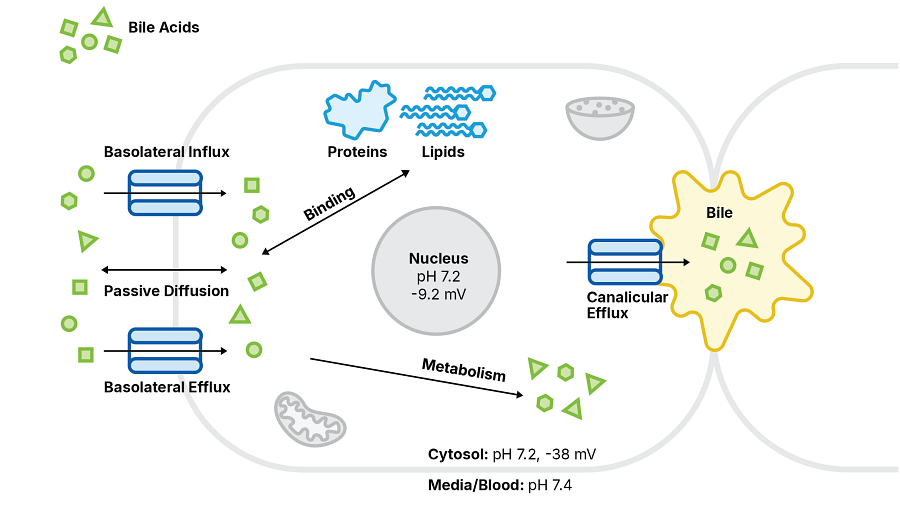
Figure 2. Mechanisms of drug disposition in hepatocytes that significantly affect unbound cellular concentration and thus Kpuu. Schema modified from reference7.
The Extended Clearance Model (ECM) serves as a reference to classify drugs into four classes based on their in vitro determined clearance mechanisms5, which can be used for predicting the rate-determining step of their elimination. Hepatic overall clearance of a compound is the outcome of a complex interplay between sinusoidal uptake, metabolism, canalicular secretion and sinusoidal efflux (Figure 2), which are considered (directly or indirectly) when determining a compound’s ECM class5.
As part of the classification, ECM also provides indirect estimates of unbound intrahepatic drug concentration (i.e., unbound liver-to-blood partition coefficient [Kpuu]), using an extended clearance equation6. For the different ECM classes, defined based on the expected Kpuu, this method can also be applied to propose the most important mechanisms driving the compound’s liver uptake and partitioning, including the impact of metabolism, active transport, and the role of pH and membrane potential.
What do our hepatic uptake assay systems offer?
Hepatocyte uptake assay features
- Plated hepatocytes or oil-spin method with cryopreserved hepatocytes
- Human and several preclinical species available, including mouse, rat, and larger animals
- OATP1B1, OATP1B3, NTCP, OCT1, and OAT2 transporter functionality in the hepatocytes is confirmed and verified during the assay
- Transporter inhibitor cocktail applied to obtain a passive transport condition
- Low temperature (0-4 °C) incubations to obtain passive transport available upon request
Sandwich-cultured hepatocyte assays
- Sandwich cultured hepatocyte (SCH) assays using B-CLEAR Technology
- Assay setup using 48-well plates to reduce cost and improve assay throughput
- Standard SCH assay available with human, canine, or rat hepatocytes
- Vectorial transport assay validated for human and rat SCH
How do we investigate hepatic Kpuu?
- Primary (human) hepatocytes seeded to collagen-coated plates are used
- Kp is determined using the C/M (intracellular/medium concentration ratio), while Kpuu is calculated as: Kpuu = Kp x fu
- Unbound fraction (fu) values are determined at 4 °C
- Assay optimized and characterized in steady-state using a selection of relevant ECM Class 1-4 compounds to obtain a robust signal and a maximal signal-to-background ratio
Hepatocye Assay Benefits
Experimental setups are tailored to each project’s needs, using the most suitable assay system.
Thoroughly validated and characterized assay systems and carefully chosen controls ensure data quality and reproducibility.
Our scientists guide your decision-making with data interpretation specifically in the context of your project.
Learn how intracellular-free drug concentration and unbound partition coefficient can be used to develop PK/PD relationships, predict drug-drug interaction risk, and estimate therapeutic indices.
Watch the Webinar
Frequently Asked Questions (FAQs) About Hepatic Uptake
-
Are plated hepatocytes a more reliable system for hepatic uptake assessment than the “oil spin” method?
Historically, the primary in vitro method for assessing liver uptake relied on measuring uptake in suspension hepatocytes that are centrifuged through a layer of oil to separate from the incubation medium. This so-called oil-spin method is, however, a low throughput and technically challenging assay, therefore alternatives have been developed over time, spurred by availability of better-quality plateable hepatocytes.
Recently, the preferred approach has become using a plated assay format as it is more universally applicable than the previously more common oil-spin method. In addition to its easier adaptability to screen-like setups, the plated approach also showed significantly lower risk of carry-over due to the drug non-specifically absorbing to the cell surface than observed in the oil-spin approach, yielding more reliable data outputs3.
Plated cells can also be incubated for longer periods with cell-to-medium concentration ratios remaining relatively stable, allowing for hepatocyte-to-medium unbound concentration ratio (Kpuu) determination3. The application of this approach is only limiting for highly hydrophilic compounds with low CLint (>3 μl/mg/min) and low intracellular binding, where the oil-spin method is still recommended.
-
Does drug protein binding affect hepatic uptake?
According to the free drug hypothesis, only unbound drugs can enter the hepatocytes and undergo further disposition processes, interact with metabolic enzymes, transporter proteins, and pharmacological/toxicological targets. It is well published that human hepatocytes can better predict in vivo clearance in the presence of bovine or human serum albumin or human plasma.
In addition, highly protein-bound anionic drugs often exhibit a greater hepatic uptake in the presence of albumin than expected based on the free drug theory. The enhancement in the uptake clearance was suggested to be due to a phenomenon described as “albumin-mediated transport,” wherein the protein-bound drug presents a more efficient uptake rate than the unbound drug.
To establish more in vivo relevant hepatic uptake determination, we developed and validated an assay for determining hepatic uptake clearance in the presence of albumin in the medium. This method enables the determination of whether the presence of proteins affects the uptake clearance or only alters the free drug concentration.
-
Can hepatic accumulation be determined if a compound undergoes CYP450-mediated metabolism?
In case the test article is expected to undergo CYP450-mediated hepatic metabolism, its intracellular accumulation may be masked by the metabolic depletion of the intracellular compound pool. For such compounds, the addition of ABT (1-aminobenztriazole), a pan-CYP450 inhibitor, to the assay medium allows for addressing hepatic partitioning and Kpuu calculation without compound loss to metabolism. In this case, a CYP450 substrate positive control compound (midazolam) is used to address both the inhibition of metabolism and hepatic uptake transport.
-
How can passive transport conditions be achieved in this system?
In both plated and suspension assay formats, passive transport can be determined by using low temperature (0-4 °C) incubations, however this approach yields underestimated passive uptake clearance values, because membrane is sturdier and less permeable due to the low temperatures8.
Chemical inhibition of active uptake has been shown to lead to better estimations of passive uptake, likely due to the inhibition of any residual uptake transport activity that may persist at 4 °C, while it also allows assessment of transporter-mediated hepatic uptake without artificially introduced changes in membrane fluidity in the assay process. Therefore, by default, SOLVO’s Hepatocyte Uptake assay applies an inhibitor cocktail to obtain a passive transport condition, while the low-temperature control can be added upon request. Estimation of the impact of a specific transporter on the overall uptake process may be generated through comparison of the effect of a single transporter-specific inhibitor versus the complete inhibitor cocktail.
-
References
[1] Maeda, Kazuya. “Organic anion transporting polypeptide (OATP)1B1 and OATP1B3 as important regulators of the pharmacokinetics of substrate drugs.” Biological & pharmaceutical bulletin vol. 38,2 (2015): 155-68.
[2] Sato, Masanobu et al. “Physiologically Based Pharmacokinetic Modeling of Bosentan Identifies the Saturable Hepatic Uptake As a Major Contributor to Its Nonlinear Pharmacokinetics.” Drug metabolism and disposition: the biological fate of chemicals vol. 46,5 (2018): 740-748.
[3] Yoshikado, Takashi et al. “Evaluation of Hepatic Uptake of OATP1B Substrates by Short Term-Cultured Plated Human Hepatocytes: Comparison With Isolated Suspended Hepatocytes.” Journal of pharmaceutical sciences vol. 110,1 (2021): 376-387.
[4] Hagenbuch, Bruno, and Peter J Meier. “Organic anion transporting polypeptides of the OATP/ SLC21 family: phylogenetic classification as OATP/ SLCO superfamily, new nomenclature and molecular/functional properties.” Pflugers Archiv : European journal of physiology vol. 447,5 (2004): 653-65.
[5] The Extended Clearance Model and Its Use for the Interpretation of Hepatobiliary Elimination Data”. ADMET and DMPK, vol. 3, no. 1, Mar. 2015, pp. 1-14.
[6] Riede, Julia et al. “Current In Vitro Methods to Determine Hepatic Kpuu: A Comparison of Their Usefulness and Limitations.” Journal of pharmaceutical sciences vol. 106,9 (2017): 2805-2814.
[7] Di, Li et al. “Evolving approaches on measurements and applications of intracellular free drug concentration and Kpuu in drug discovery.” Expert opinion on drug metabolism & toxicology vol. 17,7 (2021): 733-746.
[8] Bi, Yi-An et al. “Reliable Rate Measurements for Active and Passive Hepatic Uptake Using Plated Human Hepatocytes.” The AAPS journal vol. 19,3 (2017): 787-796.