
Protein Degradation Assays
At Charles River, we have the expertise to execute a range of in vitro biological assays to profile molecules in your targeted protein degradation assay project. We are equipped to support your project all the way along the pre-clinical pathway, and to scale assays based on your project requirements. Whether you are looking to validate protein degradation assays on a small scale, or use high-density plate-based assays in 96, 384, and 1536-well format, we have the expertise and experience in targeted protein degradation assays to execute your project.
Examples of assay platforms offered at Charles River for support of protein degrader research include:
- Split luciferase assays (e.g., HiBiT™ assays, including CRISPR capability for cell line generation)
- Time-Resolved FRET (TR-FRET)/Homogenous Time Resolved Fluorescence (HTRF®) assay
- ALPHALisa®/ALPHAScreen® Assays
- ELISA/Meso Scale Discovery immunoassay
- Luminex® multiplex immunoassay
- Western blot/Jess Simple Western™ automated western blot systems
- SMCxPRO® immunoassay platforms
- Proteomic analysis using Mass Spectrometry
- qPCR screens for pathway downstream of the target
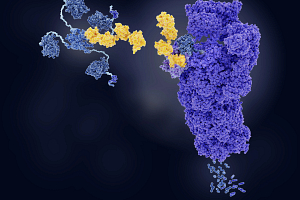
How to Build Optimal Protein Degraders to Increase Potency and Selectivity
Join this webinar as we take an in-depth look at the degrader’s potential for enhanced potency and selectivity. We’ll discuss how to build a degrader and outline how to approach your customized PROTAC project.
Watch on demand
Targeted Protein Degradation Services for Proteolysis-Targeting Chimeras
Targeted protein degradation (TPD) services using proteolysis-targeting chimeras is an innovative approach that harnesses the native ubiquitination pathways found within the body. Unlike traditional drug discovery programs that focus upon protein inhibition approaches, protein degradation assays specifically target your protein of interest for degradation within the cell.
Targeted protein degradation assays have the potential to provide many therapeutic advantages, including:
- Access to difficult-to-drug targets
- Target degradation selectivity driven by ternary complex formation
- Realize a lower clinical dose, due to the catalytic activity of compounds
- Extend pharmacodynamic effects, driven by removal of the target protein
- Potential to achieve tissue or cell population selectivity
As such, this technique has immense potential for the treatment of diseases that were once thought to be undruggable through occupancy-driven therapies. In combination with other degradation technologies, such as the endosome and autophagy-lysosome pathways (LYTACs, AUTACs) and protein degradation in bacteria (BacTACs), the use of proteolysis-targeting chimeras has the potential to revolutionize the treatment of patients.
Charles River offers comprehensive cross-discipline targeted protein degradation assays and services to prosecute your protein degrader project from proof-of-concept to clinical candidate.
Chemical Protein Degrader Toolbox
The bifunctional nature of proteolysis-targeting chimeras can lead to extended timelines for compound synthesis. To accelerate project timelines, we have developed a chemical toolbox which, used alongside our biology and ADME capabilities, allows us to more rapidly deliver decision-making degradation data for your projects.
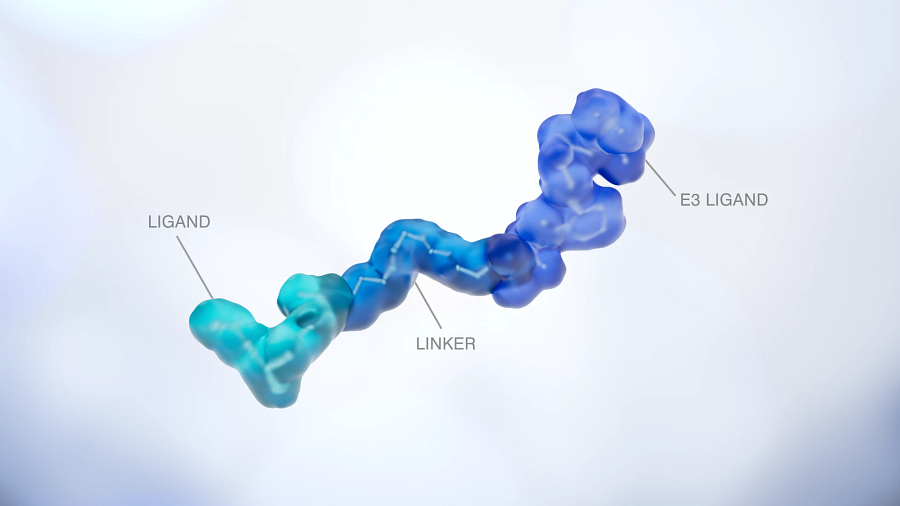
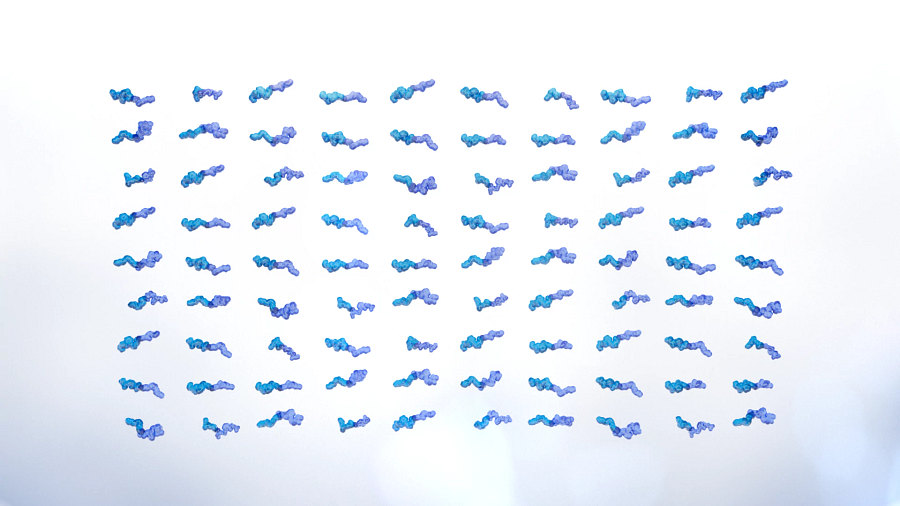
The Protein Degrader Toolbox is a set of readily synthesized monomers, containing an E3 ligase binder and a chemical linker, which can be used to synthesize bifunctional degraders in a single reaction. The design of our bespoke set of monomers is inspired by beyond-rule-of-five chemical space, and reported orally bioavailable degraders, to improve the likelihood of achieving positive degradation data alongside good permeability and solubility. A wide range of physicochemical space and linker geometry has been covered, to give the best possible chance of success for your project.
Additional Protein Degradation Assay Services
Charles River has the experience and expertise to support the full range of activities required to progress your protein degrader discovery project. In addition to medicinal chemistry and in vitro degradation assays, this includes:
- Identification of protein binders for synthesis, via DEL or ASMS screening
- Evaluation of degradation selectivity, via in vitro assays and proteomic studies
- Ternary complex structure solution using x-ray crystallography and cryo-EM
- Ternary complex and protein binder modelling to inform compound design
- In vitro ADME and in vivo DMPK studies
- Formulation for successful in vivo studies
- In vivo efficacy and safety studies
- Molecular glue screening assays
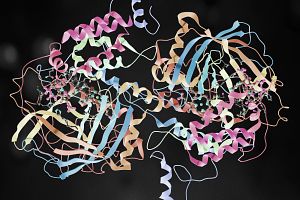
Fine-Tuning Targeted Protein Degraders
Read how researchers are using structural information and in silico modelling applications to improve the accuracy of bifunctional protein degraders.
Read the Article
Frequently Asked Questions (FAQs) About Targeted Protein Degradation Assays and Services
-
How do I know if targeted protein degradation is the right modality for my target?
Targeted protein degradation assays can be beneficial in many scenarios where overexpression of the protein results in disease state, including proteins with scaffolding functions, those that are considered “undruggable” with other modalities, and those where selectivity is difficult to achieve. Charles River will work with you to design early proof-of-concept experiments to establish the additional benefits of degradation over inhibition of your target.
-
How long does a proof-of-concept experiment take using the protein degrader toolbox?
For most targets we aim to generate a set of degraders for your proteolysis-targeting chimera, and associated degradation experiments, within four weeks of project initiation. Exact timelines depend on the identity of your protein of interest.
-
Do I need to have a small molecule binder to my protein to start a project?
It is not necessary to have a small molecule binder in hand to begin research focused on proteolysis-targeting chimeras. Charles River’s hit identification team can design and execute experiments to identify binders for you, tailored to your protein of interest.