
Cell Therapy Testing Assays
Cell therapy using modified immune cells is at the cutting edge of cancer treatment, and is also being developed for diseases beyond oncology. Chimeric Antigen Receptor (CAR) T cells and T cell receptor (TCR)-engineered T cells have emerged as promising therapies for several diseases, including cancers and autoimmune diseases. To date, multiple CAR-T cell products have been approved by the FDA for the treatment of hematological malignancies.
Charles River offers a variety of efficient in vitro assays including discovery, screening, selection, in vitro efficacy, and in vitro safety testing, as part of an integrated cell therapy discovery pipeline. Simplify your cell therapy discovery journey end to end, from concept to cure, by removing the need for multiple partners.
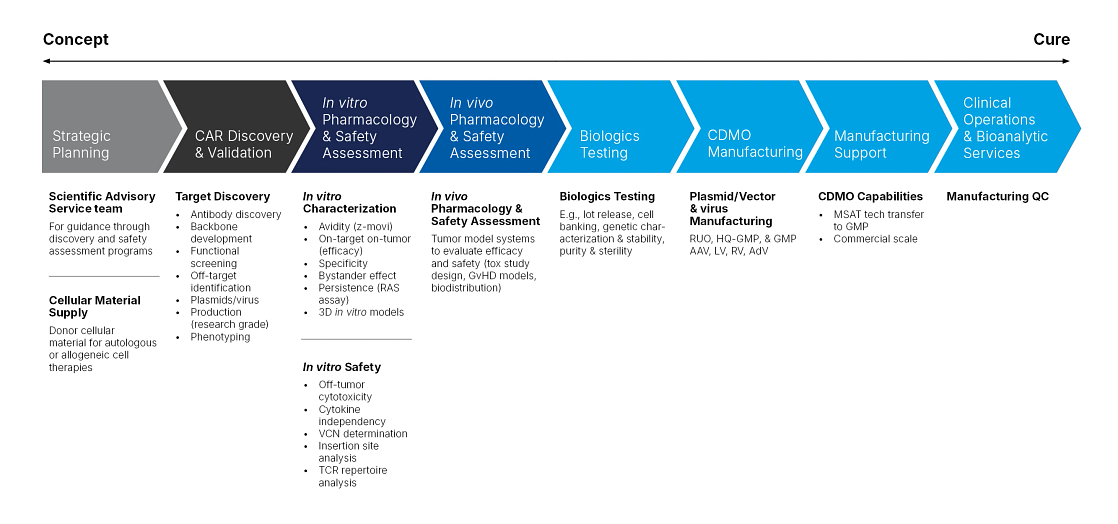
Figure 1. End-to-end discovery journey from in vitro CAR-T cell therapy testing, assays to treatment.
Strategic Planning of Your In Vitro CAR-T Cell Therapy Testing
The first step in your CAR-T program is to develop an early-stage strategic plan. We offer two complementary services to achieve this:
- A scientific advisory service team. Our experts will guide you through discovery and safety assessment programs and support the design of custom studies to advance novel cell therapies through clinical trials with reduced risk and timelines. In addition, we provide study reports to facilitate IND submission.
- Cellular material supply. A global leader in sourcing, collection, processing, cryopreservation, and delivery of human-derived cellular starting materials, our donor management expertise, high-quality products and phenotyping of individual donor cells can help match the perfect (recallable) donor for your allogeneic CAR-T cell therapy.
-
An example with PBMCs variability donors
This example highlighting the inherent variability between different donors:
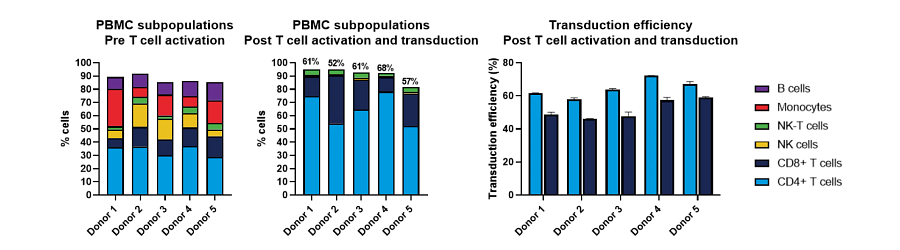
Figure 2: Data showcasing differences in PBMC donor subpopulations and transduction efficiencies.
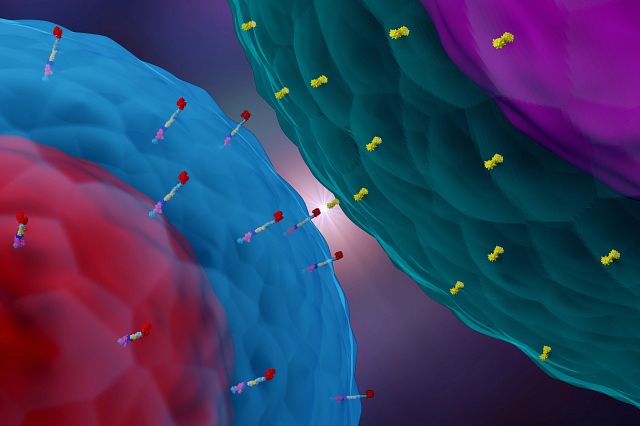
CARrying Your CAR-T to the Clinic
Chimeric Antigen Receptor (CAR)-based therapies are rapidly developing in oncology and other fields. With notable improvements in efficacy, safety, and complexity comes an increased need to streamline the development process.
Watch the Webinar
In Vitro CAR Assays for Discovery and Validation
With your IND strategy in mind, the drug target discovery phase can be initiated by designing CAR. The goal is to provide rapid results paired with robust data packages to support the success of your candidate through the following steps:
-
Antigen binding domain discovery
The CAR antigen binding domain can be selected by screening phase display single-chain variable fragment (scFv) or single domain (VHH) libraries.
-
Backbone development
Different hinge, transmembrane, and co-stimulatory domains of the CAR can be evaluated.
-
Functional screening
Packaging of CAR plasmids into viral vectors and subsequent primary cell transduction is costly and time consuming. The CAR Jurkat (CAR-J) platform is a faster and more cost-effective method for the non-viral screening of multiple CAR constructs. This platform can be harnessed to screen multiple scFv hits and complex CAR formats (e.g., multivalent CARs), and allows selection based on tonic, target-specific activation characteristics, and sensitivity. The platform has access to a vast cDNA expression library (>6000 membrane proteins) of existing and novel CAR targets to test target (and/or off-target) engagement. View this poster to learn more.
-
Off-target or off-disease tissue identification
The Retrogenix platform is recommended early in the CAR discovery pipeline for de-risking programs and lead candidate selection. The methodology for labeling and analyzing whole CAR cells or only the antigen-binding domain is widely used to identify potential off-targets and is a standard IND-enabling safety assessment tool for developers of novel CAR cell therapies.

Advances in CAR-T cell microarray screening for off-target identification
The Retrogenix platform is used to identify CAR-specific interactions and non-specific T-cell interactors, using CAR-T cells generated as part of the integrated, end-to-end capabilities for cell therapy discovery, safety, and manufacturing.
View the PosterAlternatively (or in addition), a tissue cross reactivity (TCR) study can be performed to identify off-disease binding of the antigen binding domain to tissues from healthy donors.
-
Plasmid/virus
Plasmids and viral vectors encoding your CAR of interest can be produced (de novo gene synthesis, subcloning) at research grade for your CAR development programs. A wide range of expression plasmids, promoters, tags, and fluorescent markers is available. The plasmids can be packaged into lentivirus, retrovirus, or adeno-associated virus for your delivery system of interest.
-
CAR cell production (research grade)
CAR-T cells (or other immune cell types such as NK cells) can be produced from fresh or frozen starting material from different donors, using a lentiviral (or non-viral) delivery system and optimized multiplicity of infection (MOI). The transduction efficiency can be determined, and large quantities of CAR-T cells (and non-transduced control cells) can be produced.

Figure 3: CAR-T cell production -
CAR cell product phenotyping
Produced CAR-T cells (or other immune cell types such as NK cells) are labeled with conjugated antibodies and analyzed by flow cytometry. Large panels of markers (up to 25-color capacity) can be tested in a high-throughput sampler (96-well plate). Validated activation, exhaustion, as well as general (T-) cell populations panels are available.
Once the CAR construct is designed and validated, it can be further evaluated for in vitro pharmacology and safety.
The Right Tools to Optimize Cell Therapies for Oncology
The global market for cell therapies shows no sign of slowing down. Learn the essential steps to progress your cell therapy to the market.
Watch the Webinar
In Vitro CAR Assays Characterization
To further evaluate the efficacy of your CAR-T therapy and to select a lead candidate, several in vitro assays can be performed.
-
CAR-T cell binding avidity
Avidity is the total intercellular force or binding strength between the CAR-T (or engineered TCR-T) and target cell resulting from all parallel cell-cell interactions (including receptor and cell adhesion interactions), consisting of affinity, valency, and protein orientation.
It can be quantified by applying an acoustic force to interrupt (weak) interactions between effector and target cells adhered to the z-Movi® chip and is considered a key predictor for CAR-T cell function to identify the most potent CAR-T cells.
Supporting CAR-T cell therapy development from discovery to IND-filing
We provide an end-to-end optimized pipeline to aid early-stage lead discovery, optimization, and development of CAR-T cell therapies to support investigational new drug (IND) applications in accordance with the regulatory requirements.
View the Poster -
On-target on-tumor effects (efficacy and specificity)
To determine the efficacy and specificity of CAR-T (or engineered TCR-T) cells, they are co-cultured with a positive control (expressing the target) and a negative control target cell line (not expressing the target), respectively. After 24-72 hours of co-culture, supernatant is collected for analysis of secreted cytokines as a measure of effector cell activation. The co-cultured cells are subsequently used to quantify the viability of the target cells by an end-point assay (flow cytometry or high-content imaging) or real-time assay (xCELLigence or IncuCyte).
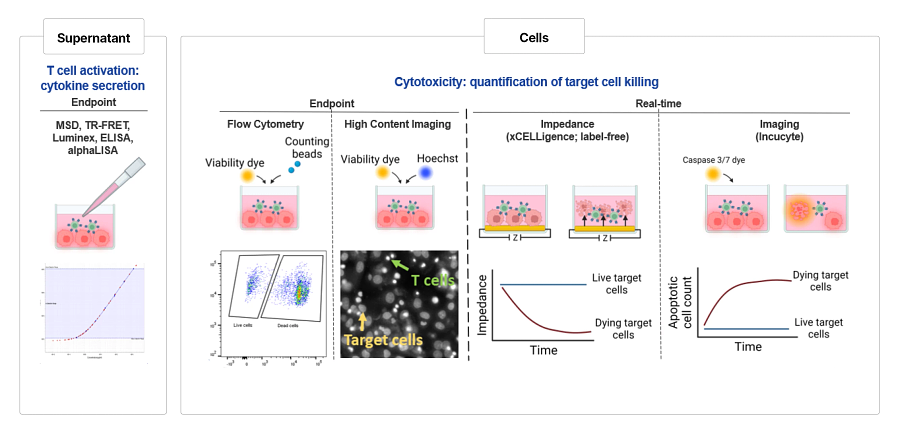
Figure 4: Co-cultured cells are analyzed for cytokine secretion and cytotoxicity. For cytotoxicity, different readout methods are available, depending on the target cell type. -
Bystander effect
To assess CAR-T (or engineered TCR-T) specificity under activating conditions (bystander effect), CAR-T cells are combined in a 3-way co-culture with target-positive and -negative cell lines. The different target cells are distinguished by using two different cellular dyes and flow cytometry is used to quantify the ratio of the three cell types after co-culturing them.
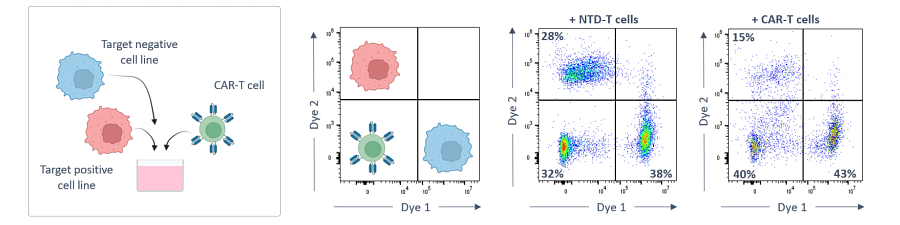
Figure 5: 3-way co-culture assay to determine bystander effect
-
Persistence (repeated antigen stimulation assay)
CAR-T (or engineered TCR-T) cell exhaustion is a common limitation and can lead to dysfunction of the cell therapy. To quantify CAR-T cell exhaustion, CAR-T cells are exposed for several rounds to fresh target-positive tumor cells, called persistence. Then, the target cell viability is quantified to determine the cytotoxic activity of the CAR-T cells for each round. In addition, CAR-T cells are analyzed for proliferation and expression of exhaustion markers by flow cytometry.

Figure 6: Repeated antigen stimulation (RAS) assay to determine CAR-T cell persistence
-
3D in vitro models
CAR-T cell (or engineered TCR-T cells) co-cultures can be set up with various 3D tumor models from patient-derived xenograft (PDX) tissues. The tumor microenvironment can be modeled by adding fibroblasts (stroma) and/or PBMCs in a patterned ECM hydrogel. Target cell killing can be assessed by imaging using an apoptosis dye.
Once in vitro efficacy of the CAR-T cells has been demonstrated, the next step for lead candidate selection is to evaluate in vitro safety. This early stage will help to discover any safety concerns to prevent failure of lead candidates in later phases.
In vitro Safety
After validating CAR-T in vitro efficacy, the next step is to evaluate potential safety concerns of the CAR-T cells, such as off-tumor effects and concerns related to insertional mutagenesis using in vitro assays described below.
-
Off-tumor cytotoxicity
 To determine off-tumor effects (on-target off-tumor or off-target effects), CAR-T cells (or engineered TCR-T cells) are co-cultured with primary or iPSC-derived cells from healthy donors to assess potential safety risks.
Target expression (mRNA and/or protein) can be assessed on selected primary cells, in addition to CAR-T cell-mediated cytotoxicity and T cell activation. A large panel of primary cells can be included, depending on expression of the target and potential off-target proteins and tissue cross-reactivity of the antigen-binding domain (e.g., scFv or VHH). In addition, primary cells representing the major organs in the human body are often included.
-
Cytokine independent growth assay
 To evaluate the oncogenicity of CAR-T or engineered TCR-T cells, the cells are cultured in the absence (and presence, as control) of cytokines for ~30 days. Cell viability and cell counts (measure of proliferation) are quantified over time to determine if the effector cells show cytokine-independent uncontrolled proliferation, possibly due to genetic modification. Transformed Jurkat cells are included as a positive control to show outgrowth under the experimental conditions.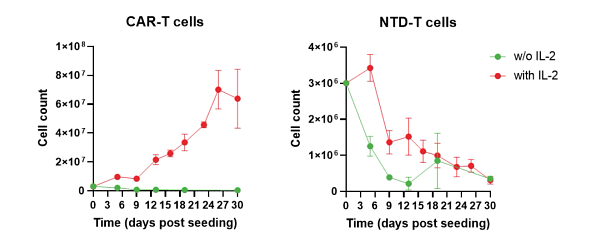
Figure 8: Cytokine-independent growth assay -
Vector copy number (VCN) determination
The number of times the CAR-encoding cassette is integrated into the genome of the human T cells poses a risk for insertional mutagenesis and can contribute to tumorigenicity. The FDA considers determining the VCN as an important safety attribute for CAR-T cell release1. To determine the average VCN of CAR-T cells, a digital droplet PCR (ddPCR) assay is used that can distinguish integrated DNA from lentiviral transfer plasmid contaminants. In addition, the average VCN can also be determined by sequencing, as shown in the next paragraph on insertion site analysis.
-
Insertion site analysis
Due to the (semi) random integration of some delivery techniques (e.g., lentivirus), the integration of the CAR-encoding cassette into the T cell genome increases the risk for secondary malignancies after CAR-T cell infusion. By sequencing CAR-T cell genomic DNA, the insertional sites of the CAR-encoding cassette can be determined.
-
TCR repertoire analysis
To determine the presence of a dominant clone as part of preclinical safety evaluation for uncontrolled CAR-T cell proliferation, mRNA is isolated from CAR-T cells that were cultured for several days/weeks and the T cell receptors (TCRs) are sequenced via next generation sequencing (NGS).
After uncovering any safety issues and confirming the on-target effects of in vitro CART cells, your drugs is ready to be moved into the next phase of development: in vivo CAR T Cell pharmacology and safety studies for IND enabling.
Cell therapies, like CAR-T cells, are a rapidly evolving area and pose a truly promising and novel approach to immuno-oncology. Charles River continues to grow and expand the cellular therapeutic portfolio to keep up with the demands of this fast-growing field. Our integrated cell therapy development platform delivers a unified pathway from concept to cure. We are the only partner you need to bring your cell therapy to the market.
1Consideration for the Development of Chimeric Antigen Receptor (CAR) T Cell Products; Draft Guidance for Industry”, U.S. Department of Health and Human Services, FDA
Frequently Asked Questions (FAQs) About In Vitro CAR-T Testing and Cell Therapy
-
Do you offer a platform for CAR-T Discovery?
Charles River offers an antigen binding domain selection platform ideally suited for CAR-T discovery. This antibody discovery platform is unique due to library design and subsequent functional screen, which reduces timeline and downstream issues with developability, immunogenicity, and thermostability. The COSMIC SuperHuman scFv library and Tungsten VHH library allow panning with different antigens (mouse, NHP, human). By working with Charles River, you can save time by efficiently moving into a functional cell therapy screening, in vitro efficacy and safety testing, CDMO plasmid and cell therapy manufacturing, biologic and bioanalytic testing.
-
What primary cell types do I need to screen my cellular therapy against?
The primary or iPSC-derived cells needed for in vitro CAR-T cell therapy testing assays will be determined by the nature of your cellular therapy, the antigen/target, and potential off-targets it recognizes. Most cellular therapy programs screen against a core panel of primary/iPSC cell types from key critical organs. By surveying normal human tissue or testing a large panel of primary/iPSC cell types for target/potential off-target expression, additional cell types are selected for off-tumor/off-disease in vitro safety testing.
Finally, primary/iPSC cell types can be selected based on observed binding of the antigen binding domain to tissues from healthy donors in a tissue cross reactivity (TCR) study. For engineered TCR therapies, primary/iPSC cells expressing the correct HLA type for your TCR are selected.
-
Why should I screen my therapy using in vitro models?
In vivo models for cellular therapy testing use immunodeficient animals bearing a relevant xenograft tumor expressing your antigen of interest. This allows assessment of in vitro CAR-T cell efficacy of tumor killing mediated by your CAR-T cell therapy. However, the human cellular therapy can make a xeno-response to the mouse tissue due to a mismatch between human HLA-restricted T cells and mouse MHC H-2 expressing cells. Furthermore, potential off-targets might not be conserved between human and mouse, suggesting that in vivo models can be limiting for the purpose of off-tumor/off-disease safety testing.
Therefore, the more relevant and translatable in vitro CART testing assays using human primary/iPSC cells for evaluating off-tumor/off-disease effects complement in vivo tumor hybrid efficacy and toxicology models.
-
What type of cell therapies are these assays designed for?
Any cellular therapeutic model can be tested in the above-described assays offered by Charles River. For example, CAR-T cells, CAR-NK cells, CAR-Macrophage, engineered TCR cells, and therapeutics designed to enhance the tumor-killing capability of the patient’s own non-engineered immune cells (e.g., checkpoint inhibitors) or engineered cell therapies. This platform can also be adapted for novel cell therapies.
-
What size project do you work on for in vitro CAR-T cell therapy testing?
Projects may be as small as a single proof-of-principle experiment or as large as a multi-site endeavor spanning several years, such as our Integrated Drug Discovery programs. Readouts for in vitro CAR-T cell therapy testing assays are tailored to suit the needs of the individual project.
-
Are the in vitro studies offered by Charles River able to support IND filing?
All readouts that are performed for in vitro safety and pharmacology can be submitted as part of an IND-enabling package. Charles River can provide written reports that meet the requirements for IND submission. As IND-enabling studies can be time consuming, we advise that our scientific advisory services (SAS) team is involved as early as possible to facilitate the requirements expected by the regulators and to guide you with designing your custom studies.