
Cell Therapy Testing
Our advanced understanding of biology and introduction of new technologies is empowering the development of human cellular products as therapy. This is especially true for the field of oncology, where we’ve made significant progress in the treatment of blood cancers with chimeric antigen receptor T cell (CAR-T) therapies and other advanced medicines. Research continues to expand the application of cellular therapies like CAR-T and others to target solid tumors.
Whether they are autologous (i.e., using the patient’s own cells) or allogeneic (i.e., using donor cells), the unique attributes of these therapies require thoughtful, therapy-specific programs to bring them to the clinic. Partnering with an organization that offers expertise in oncology from in vitro and in vivo assessments through safety testing can help you to achieve considerable cost and time savings on the road to clinic.
Oncology Preclinical Study Planning Toolkit
Take control of your efficacy study by getting instant access to study pricing, cancer model data, and connection to our oncology specialists, so that you feel supported on your oncology efficacy journey.
Find the Right Model
With a truly integrated approach to oncology cellular therapy development that leverages our portfolio of human cellular products, research models, and cellular therapy testing , our team can customize a program of pharmacology and safety studies that meets the needs of your CAR-T, gene-based, and cellular oncology therapies. We’ll help you navigate a complex regulatory landscape, collect decision-driving data, and conduct even the most specialized studies to expedite your path through development.
Choosing the Right Cell Therapy Model
There is no single animal model that replicates the full spectrum of complexities and toxicities faced in clinical testing of CAR-T cells and other cellular therapies; however, models can provide important insights into the correlative effects of preconditioning, CAR-T cell dose, tumor burden, signaling potency, and, in some instances, identified target antigen specificities associated with toxicity events.
In Vivo CAR-T Cell Therapy Testing
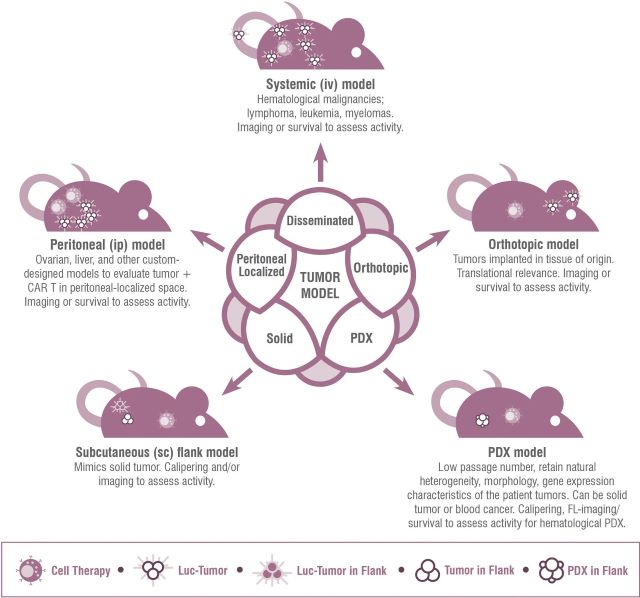
Figure 1. Diagram showcasing the in vivo CAR-T cell therapy testing models. Alt Tag: Diagram showcasing the in vivo models available for cell therapy testing, including systemic, orthotopic, subcutaneous, and PDX models.
Choosing the best animal model and optimizing the study design is critical to evaluating the effectiveness and safety profile of the product. Our in vivo CAR-T cell therapy testing models are available for xenograft, humanized, syngeneic, and transgenic settings.
It’s important to use appropriate animal models that demonstrate product activity and on-target/off-target effects as much as possible. Our established assays and models illuminate CAR-T biology, and we can personally guide you through this process.

Ready-to-order Rodent Strains for In-House Studies
Browse strains supporting diverse tumor types and immune contexts. Our high-quality rodent models, including immunodeficient strains and humanized mouse options, are designed to support your oncology and immuno-oncology applications.
Need help selecting the right model? Ask our experts or use our Model Evaluation Program to de‑risk your decision.
CAR-T Toxicity Mechanisms and Considerations
Cellular therapies can have a wide spectrum of on-target and off-target mechanisms that contribute to toxicity; it’s critical to understand these and mitigate risks before progressing to the clinic. In vivo CAR-T cell therapy testing helps reduce those risks for faster entrance to the clinic.
- On-target/on-tumor toxicity
- Pharmacology is predictable
- Cytokine release syndrome
- Tumor lysis syndrome
- On-target/off-tumor toxicity
- Pharmacology undesirable
- Hematological tumors, B cell aplasia
- Solid tumors, ERBB2, CAIX, MAGE
- Off-target toxicities
- Myeloid activation, elevated Th2 cytokines
- Neurotoxicity
- Genotoxicity, insertional mutagenesis
- Anaphylaxis, immunogenicity
- Graft-versus-host disease (GvHD)
Using established tools and rationales to incorporate toxicity assessments in chosen in vivo CAR-T cell therapy models can characterize risk and inform clinical trial designs.

Syngeneic Model Data
Access our new syngeneic model data including checkpoint inhibitor (e.g. anti-PDL-1, anti-PD-1, anti-CTLA-4), whole exome sequencing (WES), and RNA-seq data. This data gives you the ability to choose based on mutation status in addition to sensitivity immune checkpoint inhibitors.
Download now
Regulatory Guidelines for Cell Therapy Products
There is no standardized preclinical testing paradigm. Each therapy is evaluated on product-specific characteristics, so understanding regulatory guidelines is key. In an integrated approach to your oncology project, we can run safety assessments alongside our in vivo pharmacology assessments. This allows us to use preclinical data to identify translational gaps and employ safety endpoints in clinical trials to mitigate potential risks.
Let us guide the progression of your cellular therapy from discovery to the clinic; we can aid with CAR-T discovery, in vitro testing through to in vivo and safety assessment.
Frequently Asked Questions (FAQs) about In Vivo CAR-T Cell Therapy Testing
-
Is there a checklist of in vivo CAR-T and cell therapy testing?
In vivo CAR-T testing is not standardized, and the level of testing required may vary depending on the specificity of the CAR and other features. Read out checklist to aid your drug discovery.
-
What are the some of the safety concerns and challenges associated with cellular therapy?
One of the most the most challenging aspects of cellular therapies is finding ways to improve the drug’s safety profile. Treatment-related toxicities can be classified into three main types: on-target/on-tumor effects, on-target/off-tumor, and off-target/off-tumor. In vitro and in vivo CAR-T and cell therapy testing is crucial.
-
Which models should I test my CAR-T therapy in?
We can screen your cellular immunotherapies in an in vitro panel representative of the differing cell types of the human body. Our recommended testing is based on the expertise we’ve developed through years of successful immuno-oncology programs that incorporate a range of in vivo CAR-T efficacy and safety models that ensure translation to the clinic.