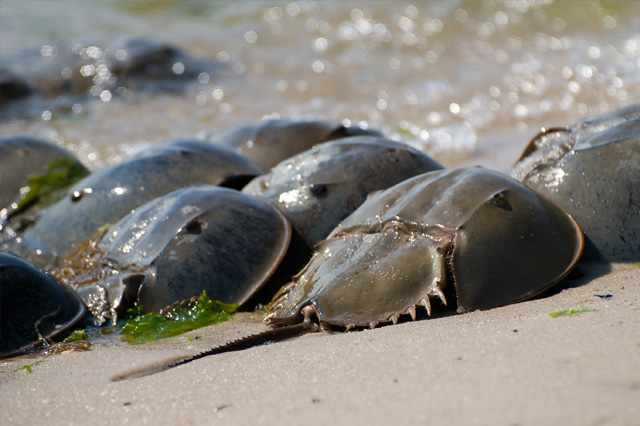
Atlantic Horseshoe Crab
We are committed to the conservation of this extraordinary animal that plays a role in everyday health and safety of people all over the world. The Atlantic horseshoe crab is an invaluable asset to the testing of implantable medical devices and injectable pharmaceutical products in ensuring the absence of endotoxins that can cause pyrogenic responses and symptoms of septic shock.
In 1992, Dr. James Cooper wrote draft legislation that promoted the conservation and regulation of horseshoe crab fisheries. As a result, the South Carolina state legislature enacted laws to protect the indigenous Atlantic horseshoe crab population.
Due to the importance of the horseshoe crab in the biomedical industry, horseshoe crab conservation efforts have increased overall ensuring the population of natures most important blood donor continues to flourish. With the availability of animal-free recombinant cascade reagents (rCR) that simulate the natural LAL reaction, we recognize not all products may work with recombinant technologies. Therefore, we continue to contribute to the conservation by maintaining our commitment and compliance with the 3Rs initiative to achieve sustainability in endotoxin testing and ensure medical treatments are safe for patients around the globe.
Learn more about how we are helping the continued population growth of horseshoe crabs.
Frequently Asked Questions (FAQs) About the Atlantic Horseshoe Crab and Conservation
-
How much blood is collected from the horseshoe crab?
Blood collection of the horseshoe crab occurs April through June, and during the collection process we collect approximately 30% of the animals’ blood. Although this may seem like a lot, horseshoe crabs cannot bleed out due to their low-pressure circulatory system. In order to prevent an unnecessary loss of life, we do not take crabs that are injured, unresponsive, or that have open wounds.
-
What is horseshoe crab blood used for?
Horseshoe crab blood is used to test implantable medical devices and pharmaceutical products such as vaccines for harmful bacteria from Gram-negative endotoxins. We use FDA-licensed LAL, the aqueous extract derived from horseshoe crab blood, to produce traditional endotoxin testing reagents and our rapid cartridge technology.
-
Why do you collect horseshoe crab blood and how does this help with horseshoe crab conservation?
Horseshoe crab blood is collected for biomedical research and for the production of Limulus Amoebocyte Lysate (LAL). LAL is used with bacterial endotoxin testing systems as it is the most specific and sensitive method available for endotoxin detection. Thanks to biomedical research and Charles River’s LAL production, horseshoe crabs maintain their biomedical legal protection, which prevents them from being used as eel and whelk bait and from overfishing. Without the need for LAL, this legal protection is not guaranteed, but as long as its protective status is maintained, the population can continue to grow.
-
What animal-free offerings are available?
A recombinant cascade reagent (rCR) that uses recombinant DNA technology to produce the critical biological proteins of LAL using lab-engineered alternatives is available. The rCR simulates the natural LAL reaction through an optimized formulation of three critical biological proteins (recombinant Factor C, recombinant Factor B, and recombinant proclotting enzyme).
Our team remains vigilant and committed to our 3Rs initiative and horseshoe crab sustainability efforts. Our recombinant technology allows us to optimize our resources while continuing our mission to reduce reliance on the horseshoe crab by innovating our formulations and microfluidics technology to enrich the LAL assay. LAL is still necessary to manufacture as recombinant technologies are not able to be utilized on all products, so we are committed to collecting this valuable natural resource in a safe and humane manner that is both environmentally sustainable and ensures medical treatments are safe for patients around the globe.
-
Where do I find more information about conservation efforts?
You may find more information on our Sustainability in Endotoxin Testing page.