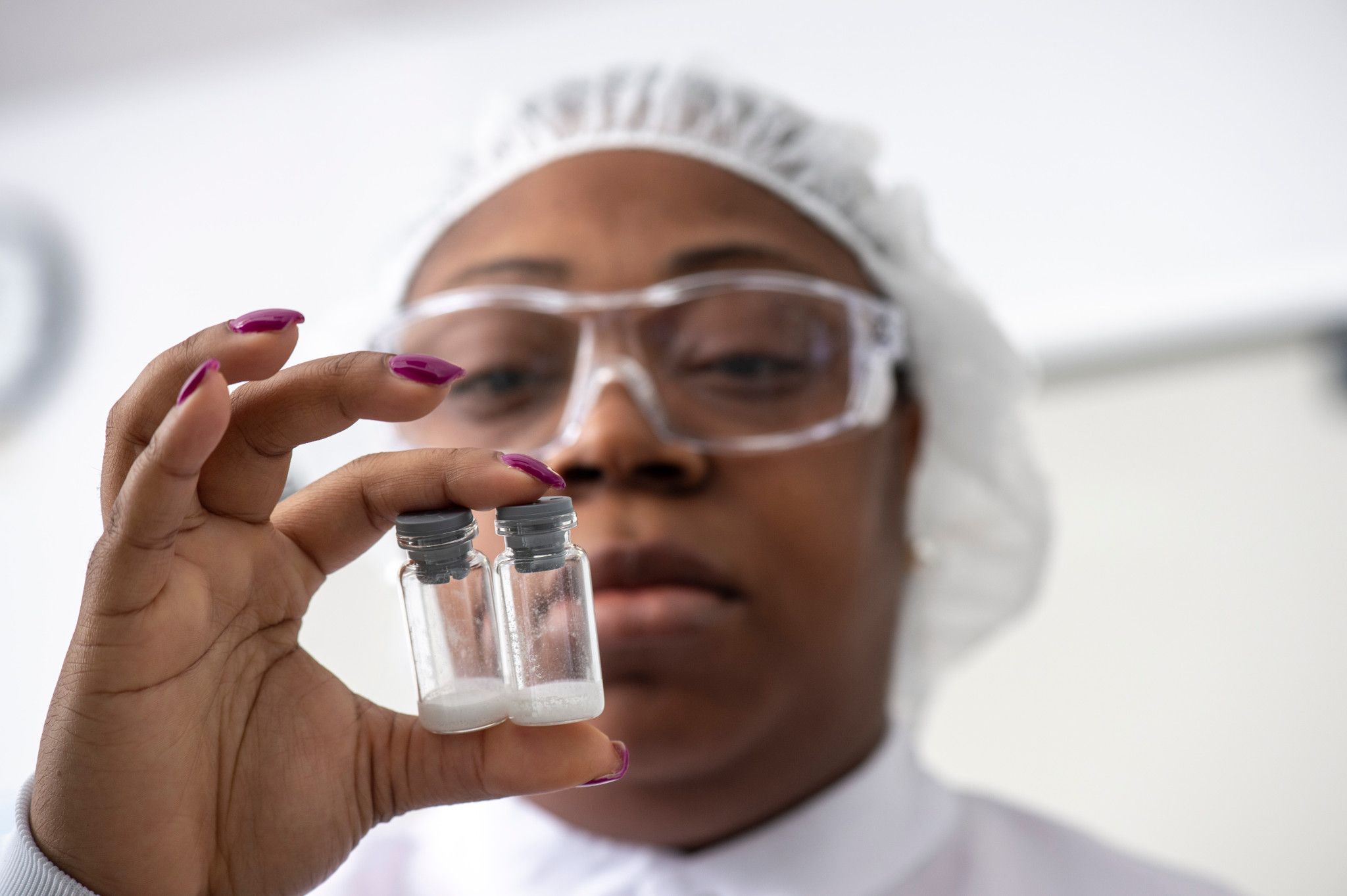
Reproducible, Reliable, and Robust Endotoxin Testing
As the trusted gold standard, Endosafe continues leading endotoxin detection, fueling greater sensitivity, speed, and interference resistance. Our offerings evolve alongside customer needs, with precise optimized formulations from traditional LAL to animal-free recombinant cascade reagents (rCR). This robust ecosystem of Endosafe reagents and accessories supports testing from raw materials, in-process, through final product release with unparalleled accuracy meeting the most stringent standards.
Endotoxin Test Methods Comparison
Today’s business environment demands agile, flexible, and resilient operations, which are directly dependent on the ability to test smarter and faster. But dated testing techniques strain productivity. Is your lab bottlenecking advancement with manual sample prep, subjective interpretation, siloed data, and rigid workflows?
Identify your Ideal Workflow
FDA-licensed Limulus Amebocyte Lysate (LAL) Reagents and Recombinant Cascade Reagents (rCR)
Since its discovery, LAL has been continually recognized as the most sensitive method available for endotoxin detection, and with approximately 80 million bacterial endotoxin tests performed each year, not one FDA-confirmed pyrogenic response has been documented due to a false-negative result. Our portfolio of FDA-licensed LAL products for rapid and traditional bacterial endotoxin testing solutions reduces retest rates, decreases variability, and improves turnaround times, enabling prompt, confident decisions about product safety.
Kinetic Chromogenic LAL (KCA): A fully quantitative and uniquely stable reagent, Endochrome-K™ is an enhanced KCA formulation that delivers an unrivaled combination of sensitivity, linearity, and interference resistance. Our Endochrome-K LAL test reagent provides quantitative endotoxin values in roughly an hour, depending on the desired sensitivity. The stability of the reconstituted LAL allows for extended bench time and reuse, making it a highly economical solution.
Kinetic Turbidimetric LAL (KTA & KTA2): Our second-generation kinetic turbidimetric LAL reagent, KTA2, has a wide standard curve (to 0.005 EU/mL) and releases one of the fastest turbidimetric LAL reaction times in the industry. Both Kinetic Turbidimetric LAL reagents are buffered to provide significant interference-resistance properties, and our KTA reagent enables you to use a single FDA-licensed product that performs both kinetic and gel-clot analysis.
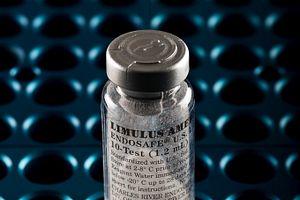
Gel-clot: Our qualitative lysate features a firm gel over a wide range of sensitivities, with buffered properties to improve interference resistance for routine LAL tests.
Endosafe® Trillium™ rCR (KCA) Specific to natural environmental endotoxins, our proprietary matrix ensures accurate recovery of relevant and natural environmental endotoxins and demonstrates assay superiority in comparability and robustness compared to single protein recombinant technologies. As a kinetic chromogenic method, Endosafe Trillium is compatible with incubating absorbance plate readers, EndoScan-V™ software, and accessories, which reduces methodology training and qualifications, eliminates the need for additional capital investments, and supports recycling initiatives of electronic lab instrumentation waste.
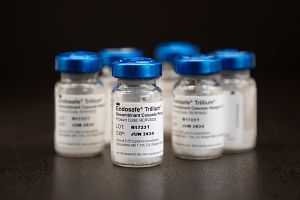

Endosafe® Trillium™ rCR Technical Report
To further demonstrate the robustness and validity of our Trillium rCR matrix and formulation, we published a technical report detailing the results of our comprehensive beta test study program. The report highlights assay equivalency to our FDA-licensed kinetic LAL assay via our primary alternate method validation.
Download the Report
Endosafe® Cartridge Technology
This technology streamlines and optimizes bacterial endotoxin detection into a single ready-to-use, disposable cartridge. Obtain real-time, quantitative endotoxin analysis results while reducing time-consuming preparation and technician variability. Available in both Endosafe FDA-Licensed LAL and Endosafe® Trillium™ recombinant cascade reagent (rCR), reducing and or replacing the usage of horseshoe crabs further embraces commitment to the 3Rs.
LAL Cartridges
Our FDA-licensed LAL test cartridges use Endosafe chromogenic LAL reagent to directly quantify endotoxin concentration through color intensity changes, with an archived standard curve integrating all needed controls. This proven USP and Ph. Eur., compliant BET method delivers sensitive results in approximately 15 minutes from 0.005 to 10 EU/mL.
Trillium™ rCR Cartridges
Our rCR cartridges use an optimized kinetic chromogenic reagent formulated with 3 recombinant proteins (recombinant Factor C, recombinant Factor B, and recombinant proclotting enzyme) to mimic the Limulus Amebocyte Lysate cascade. Their built-in standard curve generates accurate, quantitative endotoxin levels from 0.5 to 0.005 EU/mL, 1 to 0.01 EU/mL, and 5 to 0.05 EU/mL sensitivities in about 15 minutes.
Beta-Glucan Cartridges
The kinetic Beta-Glucan assay rapidly detects within 30 minutes when investigational samples contain (1,3)-β-D substances, known drivers of interference and false positives in LAL testing potentially spurring unnecessary deviations. The chromogenic reaction measures color changes across a 10-1000 pg/mL sensitivity range.
Endotoxin Testing Accessories
Proper accessory selection is imperative for endotoxin testing, facilitating unencumbered data collection free of artifacts and interference. Our certified tubes, pipette tips, and filters satisfy pharmacopeial directives around using materials that avoid compromising assay accuracy or sensitivity.
*According to the harmonized global pharmacopoeias, it's noted for end users to adhere to the LAL manufacturers' product inserts when utilizing LAL for bacterial endotoxin testing. Off-label usage, including utilizing any other volume, would be outside of current FDA licensing. The end user would have to perform additional method validations on the lysate to ensure comparability.
Product inserts can be obtained on the microbial Solutions portal

Replace, Reduce, Refine: Achieving Sustainability
We continue to reaffirm our commitment to and compliance with the 3Rs imperative, as we partner on your journey toward ensuring laboratory, patient, and environmental safety through responsible and sustainable practices.
Discover Our Dedication
Frequently Asked Questions (FAQs) About Endotoxin Testing Reagents
-
How does the LAL test work?
LAL is an aqueous extract of blood cells (amebocytes) from the Atlantic horseshoe crab, Limulus polyphemus. Comprised of proteins, LAL is used to detect the presence of bacterial endotoxins, a cell wall component of Gram-negative bacteria that causes a pyrogenic response (fever response) and symptoms of septic shock. Even if dead, these components trigger a response in LAL, causing it to clot and coagulate. The LAL will either become opaque, or in the case of kinetic chromogenic lysate, yellow, in the presence of endotoxin.
-
What is the LAL test used for?
The LAL test is used to detect and measure instances of bacterial endotoxin contamination in drugs, biological products, medical devices, and others. The LAL test is the most sensitive and specific means to detect bacterial endotoxin.
-
When should an LAL test be performed?
The LAL test should be performed on raw materials and final products for intravenous intrathecal drug products, in addition to medical devices. Performing an LAL test provides data on potentially contaminated products, in which the contaminants would directly enter the bloodstream of the person to which it is administered. Bacterial endotoxins cause a pyrogenic reaction that can be deadly in many cases.
-
Is Endosafe® Trillium™ rCR as good as naturally occurring LAL?
As with all commercially available recombinant technologies for BET, Trillium recombinant cascade reagent does not yet have the years of comparative data laboratory experts have come to rely on that shows the high level of accuracy of the natural variation. Our primary validation data supports the claim of equivalency to LAL. Users would need to perform their own product-specific alternate method validation.
-
How is the testing methodology for Trillium rCR different than a Kinetic Chromogenic LAL assay?
The steps for assay preparation in our rCR assay are very similar to those of a traditional chromogenic LAL assay. The only difference between the two assays is the volume of reagent used. The Trillium assay uses 50 μl of sample, negative controls, and standards, as well as 50 μl of Trillium reagent whereas the traditional chromogenic LAL assay uses 100 μl of sample and reagent. Also, a 5 μl spike is used instead of a 10 μl spike.
-
What is water for BET?
Our water for BET is endotoxin-free and is mainly to reconstitute LAL or RCR and controlled standard endotoxin (CSE), and to make sample dilutions.
-
What are the available methods for bacterial endotoxin testing?
The main methods used for bacterial endotoxin testing use Limulus amoebocyte lysate (LAL) and are gel-clot, kinetic chromogenic, and kinetic turbidimetric.
-
What is the gel-clot method for bacterial endotoxin testing?
The gel-clot method is a qualitative BET and is used to detect the presence or absence of endotoxin in the prepared sample. When endotoxin encounters the LAL reagent, it triggers a series of enzymatic reactions. The enzymes change the amoebocyte coagulogen present in LAL reagent to form a detectable gel-clot.
After the test is performed, if a clot has formed and remains intact at the bottom of the tube, the result of the test is positive, meaning that there is detectable endotoxin in the sample. When no clot forms or the clot dissipates when the tube is turned upside down, the result is negative, meaning there is no detectable endotoxin in the sample based on the sensitivity of the LAL reagent.
-
What is the kinetic chromogenic method for bacterial endotoxin testing?
The kinetic chromogenic method measures the absorbance of light in LAL reagent to determine if endotoxin is present by visible color changes. The degree of color and the rate at which the color appears is directly proportional to the amount of endotoxin within the sample.
The chromogenic method is user-friendly and can be automated, which decreases the amount of time required to perform the test, allows more LAL assays to be completed per unit of time and calculations can be performed simply. Both of Endosafe cartridges reagent types use a kinetic chromogenic method.
-
How is the kinetic turbidimetric method different than the gel-clot test?
The kinetic turbidimetric method is a modified extension of the gel-clot test. It measures the change in turbidity over time. The LAL reagent is altered so it is unable to form a solid clot when exposed to endotoxin. The amount of endotoxin present is inversely proportional to the reaction time.
-
How is Endosafe Trillium different than the LAL method?
In addition to LAL, we offer Endosafe Trillium, an animal-free optimized kinetic chromogenic recombinant cascade reagent (rCR). Curated to simulate the natural LAL reaction, the formulation and composition of Trillium includes the three critical biological proteins (recombinant Factor C, recombinant Factor B, and recombinant proclotting enzyme) and a specific concentration of key components.
Learn more about our complete portfolio of reagents and accessories to ensure bacterial endotoxin-free products during manufacturing.
-
Where do I find more information?
You may find more information on our Endosafe technical resources page.