
What is Fragment-Based Lead Discovery
Fragment-Based lead discovery is the method whereby small molecules of around 150-300 Da MW are screened against a target and with suitably sensitive techniques. These highly efficient ligands can be developed into larger lead compounds.
Fragment-Based Lead Discovery has significant advantages over conventional HTS screening, which requires much larger compound libraries and can lead to lower-efficiency ligands that require considerable re-engineering, providing you with an efficient, cost-effective method to begin your drug discovery.
Fragment-based drug discovery (FBDD) Capabilities
Charles River can offer access to expertise in the following areas:
| Orthogonal Screening Technologies | Technologies include thermal shift assay (DSF), surface plasmon resonance (SPR) using Biacore™ instrumentation, isothermal titration calorimetry (ITC), NMR, high-concentration biochemical assay, and X-ray crystallography. |
| Structural Biology | Considerable experience in development and optimization of crystallization platforms for in xtallo fragment screening using XCHEM at Diamond Light Source. Multiple successful campaigns delivered for protein and protein-nucleic acid targets. Many examples of novel binding sites discovered. |
| Unique Fragment Library | 1,500 member core library at 80 mM, 400 member kinase focused set at 80 mM and 500 member 19F labelled set at 100 mM, all regularly curated and designed for fragment screening and rapid FBDD optimization of hits. Poised library of around 800 fragments available at DLS at 0.5 M for high concentration XCHEM screening. |
| Computational Chemistry | Proprietary fragment hit expansion techniques and fragment shape-based analysis tools. |
| Medicinal Chemistry | Expertise in structure-based drug discovery and fragment hit optimization. |
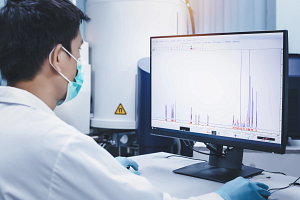
Do 19F NMR fragment screening libraries for FBDD incorporate the latest trends in library design?
This scientific poster describes the process applied to establish a new 500 member 19F labelled fragment library, primarily for screening via NMR.
View the poster
Frequently Asked Questions (FAQs) About Fragment-Based Drug Discovery
-
What are the limitations of crystallography-based fragment screening?
Crystallization platform needs to be both robust and reproducible and generate data of around 2.5 Angstrom resolution or better. Hundreds of viable crystals are required for crystal soaking.
-
What is the sensitivity of the different fragment screening methods?
Biophysical methods like Thermal shift, SPR, ITC, & NMR have wide sensitivity ranges from pM to mM. With in xtallo screening we can show clear fragment binding even in the multi-mM range.
-
What are the timelines for different fragment-based screening methods?
Once a target is purified and shown to be active and stable, fragment screening via biophysical methods can be completed in around 2-4 weeks and in xtallo screening can be completed in around 6-8 weeks if a suitable crystal system is available.