Multiple Sclerosis Animal Models for Drug Discovery
Preclinical studies typically use one of two multiple sclerosis animal models; experimental autoimmune encephalomyelitis (EAE) models or demyelination models. EAE models are widely used to test therapies targeting the inflammation component of multiple sclerosis. Similarly, multiple sclerosis models where demyelination is induced by cuprizone, lysolecithin, or ethidium bromide are increasingly being used to test therapeutic candidates. Charles River conducts studies in both inflammation and demyelination models to test the efficacy of novel therapeutics, as well as innovative multi-cell culture models of myelination processes.
In vitro Multiple Sclerosis Models
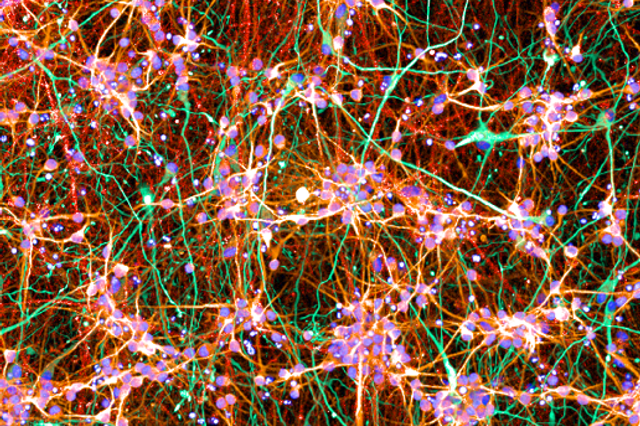
To enable multiple sclerosis drug discovery, we have developed a multi-cell culture model using human iPSC-derived glutamatergic neurons and oligodendrocytes. From day 7 of co-culture, myelin basic protein (MBP; a marker of mature oligodendrocytes)-positive cells can be identified, and this marker co-localizes with neurofilament H as a marker of neurites. This demonstrates active myelination in this cell model, which can be used to investigate the ability of novel compounds to affect myelination/demyelination.
EAE Multiple Sclerosis Models
EAE multiple sclerosis models are well understood and commonly used for studies of brain inflammation in multiple sclerosis. We offer EAE rat and mouse study models to test novel multiple sclerosis therapies. These multiple sclerosis models have been validated with positive control compounds including dexamethasone, glatiramer acetate, and fingolimod.
Demyelination Multiple Sclerosis Models
We offer cuprizone- and lysolecithin-induced rodent models of demyelination to test novel therapies for multiple sclerosis. The cuprizone model uses a validated study design where demyelination is induced followed by a recovery period of remyelination. During the study, motor performance, anxiety, and cognition are measured at specific intervals, along with confirmation histology and IHC studies.
The following has been observed in the cuprizone demyelination model:
- Increased neuroinflammation measured by SPECT imaging of TSPO
- Decreased 18F-deoxyglucose consumption by PET imaging after longer exposures to cuprizone
- Decreased immunostaining of myelin basic protein (MBP) in the brain
- Mild neurological consequences, but alterations in the open field-testing results
- Changes in specific parameters of fine motor kinematic analysis suggesting gait changes
Exploratory Toxicology for Neuroscience Drug Discovery
This eBook describes strategies across the early stages of drug discovery to support confidence in your lead small molecule candidate and to ensure you proceed through the drug development process with the most promising candidate.
Download eBook
Components for Your Multiple Sclerosis Drug Discovery Studies
Behavioral Testing
In Vivo Imaging
- MRI
- FDG PET for metabolism
- SPECT imaging for neuroinflammation
Biomarker Analysis
- Nanostring gene expression profiling
- Microglial activation assays (phagocytosis, inflammasome activation and cytokine release)
- Cytokine profiling
- Histopathology of brain and spinal cord
- IHC for myelin basic protein, markers of neuroinflammation
- Microdialysis for neurotransmitter and PD/PK studies
Innovative Cell Models for Myelination and Neuroinflammation
In this webinar, our neuroscience experts will discuss the advantages of using human-induced pluripotent stem cell (iPSC)-derived cells, such as neurons, microglia, and oligodendrocytes, in drug discovery assays.
Watch the Webinar
The Need for Multiple Sclerosis Drug Discovery
Multiple sclerosis is an autoimmune neuroinflammatory disease in which demyelination of the central nervous system (CNS) is a hallmark characteristic. Multiple sclerosis has a complex disease progression but is thought to start with priming of peripheral T-cells by an antigen that resembles an endogenous CNS antigen. Activated T-cells then permeate the blood brain barrier, attracting other immune cells to infiltrate the CNS. Once reactivated by a CNS antigen, infiltrating immune cells cause inflammation that damages axons and their myelin sheath, leading to demyelination and neurodegeneration.
There are four major disease categories that have varying degrees of progression and symptoms:
- Relapsing-remitting MS (RRMS), which is characterized by flare-ups and remissions of symptoms
- Secondary progressive MS (SPMS), which may develop in some relapsing-remitting multiple sclerosis patients and is characterized by worsening symptoms with no remissions
- Primary progressive MS (PPMS), where the symptoms progressively get worse with no remissions
- Progressive-relapsing MS (PRMS), which has progressive symptoms from onset with occasional flare-ups
There is no curative therapy currently available for multiple sclerosis, however, a handful of drugs targeting the autoimmune component are used primarily to manage flare-ups. Recently, a new breakthrough therapy (ocrelizumab) was approved for PPMS as well as RRMS, but there is still an unmet clinical need for the more debilitating forms of multiple sclerosis.