GvHD Models for Cancer Research
Charles River offers two GvHD mouse model studies that can be used to evaluate novel treatments, or as a screening platform to test mechanisms of immunoregulation.
Hematopoetic stem cell transplantation (HSCT) is a potentially curative procedure for haematological malignancies of the blood and bone marrow. It can replenish the immune compartment and may induce beneficial anticancer effects referred to as graft-versus-tumor (GVT) activity.
Unfortunately, Graft versus Host Disease is a serious complication in patients receiving HSCT. The disease is triggered by the reactivity of donor-derived immune cells against allogeneic recipient tissues and is a major unmet medical need with limited treatment options. Responsible for 15-30% of deaths that occur following HSCT, it is the main cause of morbidity in up to 50% of recipients.
GvHD Study Planning Toolkit
Take control of your efficacy study by getting instant access to study pricing, cancer model data, and connection to our oncology specialists, so that you feel supported on your oncology efficacy journey.
Start Planning Now
In the following video, Research Director David Harris discusses the issue of GvHD in oncology and how Charles River’s models can evaluate the efficacy of novel treatments or act as a screening platform to test mechanisms of immunoregulation.
Selecting the Appropriate GvHD Mouse Model for Your Program
Charles River offers two types of preclinical GvHD mouse models: allogeneic and xenogeneic. Our models mimic the clinical disease associated with the HSCT and can also be used as a pharmacodynamic screening model.
Graft Versus Host Disease (GvHD) Mouse Models: Allograft and Xenograft
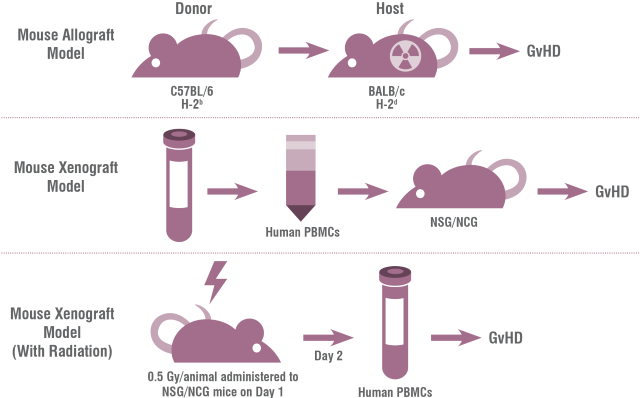
Figure 1: Diagram of how GvHD mice are generated
The allograft and xenograft GvHD models can be used:
- To identify new drugs for the treatment of Graft vs Host Disease
- As a pharmacodynamic (PD) screening platform to evaluate the ability of immunoregulatory drugs to modulate the disease progression
- As an in vivo screening platform to assess the MoA of drugs that mediate either immunosuppression or immune activation/potentiation
Standard Model Endpoints*:
- Body weight
- Kaplan-Meier survival analysis
- Disease scoring
- Engraftment and phenotypic analysis
- Histopathology
- Cytokine analysis
- Flow cytometry
*Bespoke model systems and readouts can be designed upon request.
Allograft GvHD Mouse Model: MHC-Mismatched Model of T Cell-mediated Acute GvHD
Our allograft GvHD model is based on the established model in which BALB/c host mice are irradiated and engrafted with MHC-mismatched T cells from C57BL/6 donor mice.
Xenograft GvHD Mouse Model: Human T Cell-Mediated Acute GvHD Model
Patients commonly receive bone marrow transplantation following myeloablation (with radiation or other means). To increase the translational relevance of our xenogeneic model, we engraft immunodeficient mice (NSG/NCG) with human PBMCs. We offer custom-designed models with or without radiation to meet client-specific objectives.
Disease progression in this model can be further exacerbated by hyperimmune activating drugs. Drugs with immunoenhancing mechanisms of action may have a therapeutic application in cancer treatment, making this a useful PD screening tool.
Pharmacodynamic Models for Target Engagement
To support a comprehensive evaluation of immune-modulating therapies, we also offer a wide selection of pharmacodynamic (PD) models, including our adoptive T cell transfer model, which, together with the GVHD model, provides complementary insights into efficacy, mechanism of action, and safety of T cell–based or immunomodulatory drug candidates. Learn more
Have more questions?
Frequently Asked Questions (FAQs) About GvHD Mouse Models
-
What is a GvHD mouse model?
GvHD mouse models can be used to test the effects resulting from bone marrow transplants and other cancer treatments. However, they can also be used to screen immunostimulatory drugs to demonstrate proof-of-concept for immune-activating drugs seen in cancer models. Charles River runs multiple screening models for cancer treatments.
-
Which GvHD mouse model should I choose to test my cancer therapy?
If the test agent is mouse-specific, the allogeneic model is most suitable; if the test agent is human-specific, the xenogeneic model is more appropriate. Graft vs Host Disease studies may be required by the FDA for certain types of allogeneic human cell therapy products. Ask us more about our capabilities supporting IND-enabling programs in cell and gene therapy.
-
What is the source of PBMCs for my xenogeneic GvHD study?
We can work with client-provided PBMCs or commercially available PBMCs. We have analyzed the engraftment and disease kinetics for a small cohort of donors and are happy to share the available data with you.
-
What is the typical GvHD study duration?
The typical endpoint in both xenograft and allograft models is 42 days, however, this can be reduced or extended as needed.
-
Why choose Charles River for my Graft vs Host Disease studies?
We have large-scale capabilities and extensive experience running complex GvHD models with multiple endpoints. We can perform the in-life as well as the ex vivo analysis; our extensive immunology capabilities (flow, ELISA, Luminex®) can be used as readouts to help you further characterize the model and learn about changes happening at the cellular level. We have the flexibility and capabilities to custom-design models to meet your specific needs, in addition to a wide range of oncology models and supporting in vitro assays.

Mouse Models for GvHD Study Design
Running GvHD studies in‑house? Use study-ready BALB/c and/or C57BL/6 mice for allogeneic GvHD, or HuPBMC options for human‑specific therapies.
Need longer study windows? Choose NCG‑B2m‑KO or NCG‑MHC‑dKO to delay GvHD onset.