Testing Immunotherapies in Syngeneic Models
Cancer immunotherapies are designed to work in conjunction with a patient's immune system to increase native anti-tumor responses. In this field of study, conventional xenograft models lack relevance due to the animals’ immunocompromised status. A syngeneic mouse model (e.g., 4T1 and MC38 cell lines), however, provides an effective approach for studying how cancer therapies perform in the presence of a functional immune system.
Syngeneic Mouse Models
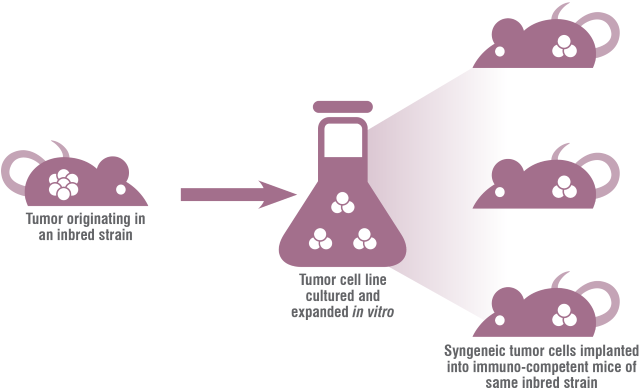
Figure 1: Diagram of syngeneic mouse models. Tumor tissue of the same (murine) genetic background is implanted into a mouse with an intact native immune system.

Cancer Types Spotlight
-
Lung Cell Lines
- Lung cancer remains one of the most challenging malignancies to treat, but our well-characterized lung syngeneic mouse models offer critical insights into potential therapies.
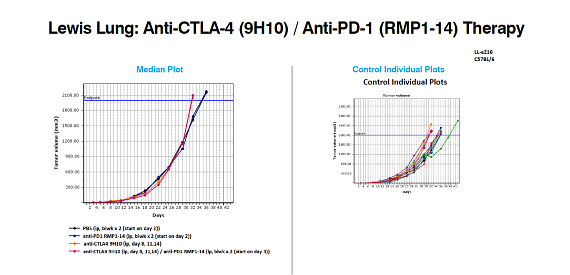
- With models such as Lewis Lung (LL) and KLN 205, which are backed by comprehensive immunologic profiling and response data to checkpoint inhibitors like anti-PD-1 and anti-CTLA-4, we enable a deeper understanding of immune responses in the lung tumor microenvironment.
- Our lung syngeneic models help drive your immuno-oncology research forward by providing robust, reproducible results in the context of a functional immune system.
-
Breast Cell Lines
- Breast cell lines are a crucial tool for studying breast cancer in a preclinical setting. Key features of breast syngeneic mouse models include an intact immune system and orthotopic implantation, mimicking natural disease progression in the mammary gland.
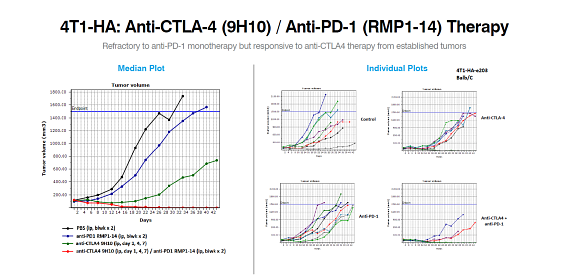
- Various tumor cell lines: a range of breast cancer cell lines is available, each line with distinct characteristics and genetic profiles. Example of established syngeneic models with profile are 4T1, 4T1-HA, EMT-6, E0771, EMT-6-BRCA1 (-,-), and (+,-); and without profile, 4T1-BRCA1 (+/-)
- 4T1 is a highly metastatic model derived from BALB/c mice. It is still one of the most used models for the assessment of novel anti-cancer immunotherapies, offering both subcutaneous and orthotopic models. In addition, a bioluminescence as well as a fluorescence-tagged subclone of 4T1 is available, facilitating disease monitoring via bioluminescent imaging and via iRFP713.
- EMT6, derived from a mammary carcinoma in a BALB/c mouse, serves as a vital platform for testing treatment efficacy and PK/PD effects, available in subcutaneous and orthotopic models. Well-characterized subclones carrying BRCA1 KO mutations are available to screen for compounds targeting this common mutation.
- Utilizing breast syngeneic mouse models allows researchers to expedite the development of effective breast cancer treatments, ultimately enhancing patient outcomes.
-
Colon Cell Lines
- Offering common models, such as Colon26, CT26, MC38, KP, and KP4 with profile, provides valuable insights into colon cancer.
- Colon26 and CT26 models, mouse colon adenocarcinoma cell lines derived from a tumor induced in BALB/c mice, are commonly used in cachexia research as subcutaneous models.
- MC38 mouse model, also known by various synonyms such as MC-38, MCA-38, and Mouse Colon 38, is derived from a colon tumor in a C57BL/6 mouse, its primary advantage being its sensitivity towards anti-PD1 and CTLA4 treatment.
- By utilizing colon syngeneic mouse models, researchers can accelerate the development of effective treatments for colon cancer and improve patient outcomes.
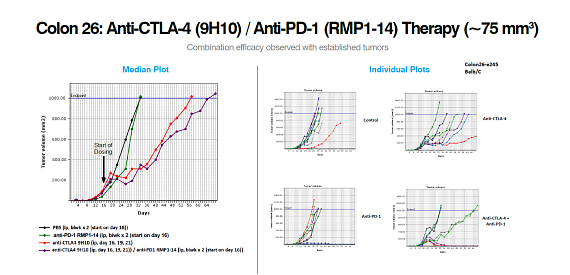
- Offering common models, such as Colon26, CT26, MC38, KP, and KP4 with profile, provides valuable insights into colon cancer.

Cancer Model Database
Support your in vitro, in vivo, and ex vivo studies with a user-friendly search, new model data (including HLA typing, growth curves, and tumor images), and multi-parameter search options for all tumor model types.
Visit Our Database
Characterized Syngeneic Mouse Models
Charles River offers a broad range of syngeneic mouse models with well-characterized responses to known immune checkpoint inhibitors (e.g., anti-PDL-1, anti-PD-1, anti-CTLA-4), immune profiling, and genetic evaluation (e.g., whole exome sequencing, RNA-seq). With a portfolio of syngeneic models that are responsive to immunotherapies as well as complimentary in vitro and in vivo models in patient-derived xenografts (PDX), humanized models, and target validation, Charles River is your ideal partner to advance your immuno-oncology pipeline.
Syngeneic model selection is often based on:
- Responsiveness to known immune-modulating therapies such as anti-CTLA-4 and anti-PD-1
- Extent and composition of tumor-infiltrating leukocytes (TIL)
- Immunogenicity
We offer syngeneic mouse models with and without profile. Our syngeneic models with profile have been evaluated for response with checkpoint inhibitors and/or chemotherapies. We also offer syngeneic models with growth curves, but no standard agent/checkpoint inhibitor data. The following syngeneic models are available now:
| Histotype | Available Cell Lines |
|---|---|
| Bladder | MB49*, MBT-2*, UPPL-1541* |
| Breast | 11509-F*, 4T1*, 4T1 EF1A-mKate2, 4T1 luc, 4T1-BRCA1(+/−), 4T1-HA*, E0771*, EMT-6*, EMT-6-BRCA1(−/−)*, EMT-6-BRCA1(+/−) |
| Colon | Colon_38_FR, Colon26*, CT26*, MC38*, MC38-OVA* |
| Hepatoma | Yoshida |
| Leukemia | C1498*, L-1210*, P388* |
| Lung | J558*, KLN 205, KP*, KP1-lung*, KP4-lung*, Lewis Lung*, LL_FR*, LL-OVA*, Madison109* |
| Lymphoma | A20*, E.G7-OVA*, EL4*, El4-CD20 |
| Mastocytoma | P815 |
| Melanoma | B16F10*, B16F10-OVA, CHL-1*, CloudmanS91*, YUMM1.7* |
| Neuroblastoma | N1E-115* |
| Oropharyngeal | mEER |
| Pancreatic | Pan02* |
| Plasmacytoma | J558 |
| Renal | Renca* |
| Sarcoma | EHS, Meth A |
| Teratoma | F9_FR |
* Lines that are available with profile

Syngeneic Model Data
Access our new syngeneic model data including checkpoint inhibitor (e.g. anti-PDL-1, anti-PD-1, anti-CTLA-4), whole exome sequencing (WES), and RNA-seq data. This data gives you the ability to choose based on mutation status in addition to sensitivity immune checkpoint inhibitors.
Download now
PK/PD Studies
In addition, pharmacological effects and pharmacokinetics of test compounds can be determined in the tumor microenvironment with high sensitivity and temporal resolution by our in vivo microdialysis services. In vivo implantable microdevices can also be used to aid studies by allowing simultaneous in vivo testing of multiple drugs, drug doses, or drug combinations in a single tumor.
Complementary Immunology Assays
As the science evolves, we have worked to enhance our portfolio with additional mouse models of cancer and will continue to expand into additional models that allow for this simulation in vitro and in vivo, including humanized models, genetically altered models, and cytokine response, T-cell activation, and toxicity assays.
Additionally, we offer targeted transcriptomics using NanoString gene expression analysis platform to provide information on how the therapeutic is regulating the tumor microenvironment.
Have another question or need advice on which model is right for you?
Frequently Asked Questions (FAQs) on Syngeneic Mouse Models
-
What is a syngeneic mouse model?
Syngeneic mouse models, also known as Allograft mouse tumor systems, consist of tumor tissues derived from the same genetic background as a given mouse strain. As the syngeneic mice retain intact immune systems, they are particularly relevant for studies of immunotherapies. Examples of uses include cancer therapies targeting immune checkpoint or immune co-stimulatory molecules.
-
What is an orthotopic model?
In orthotopic models, tumors are implanted into the equivalent organ from which the cancer originated. Orthotopic models have a similar tumor microenvironment as the original tumor, which allows for the assessment of tumor development in a model that mimics natural disease progression.
-
What is a mouse xenograft model?
In mouse xenograft models, human tumor cells are transplanted, either orthotopically or subcutaneously, into immune-compromised mice that will not reject the human cells. Xenograft mouse models allow for the analysis of human tumor response to anti-cancer therapies.
-
What is flow cytometry?
Flow cytometry is an analytical cell-biology technique that utilizes light to count and profile cells in a heterogenous fluid mixture. Our in-house multiplex flow cytometry enables a comprehensive analysis of the immune system, allowing identification of various cell populations and deep interrogation of an immune response elicited from novel therapeutics.
-
What oncology models are right for me?
In a complex and changing field, knowing the next step can be difficult. Answer a few brief questions about your research to receive expert guidance on how to advance your oncology program.